Starting from Zero: The Ultimate Resource Guide for Young Founders
Starting a business when you have little to no experience can feel like standing at the base of a mountain without a map. The media and internet often heavily romanticize entrepreneurship, which distorts what success actually looks like, how hard the path is, and what is actually worth pursuing.
If you are starting entirely from scratch, you don't need generic advice. You need a toolkit of specific resources to consume consistently before and during the launch of your venture. Forest Richter (President) and Guillaume Catella (Program Manager) at LaunchX Entrepreneurship Program, have curated this definitive starter toolkit. Pulling from hands-on experience guiding thousands of young founders within the LaunchX ecosystem, they have compiled the exact books, frameworks, and strategic realities they firmly believe in when it comes to entrepreneurship. This is your map.
For Thinking Critically & Understanding the Market
One of the biggest mistakes first-time founders of any age make is becoming too married to their initial idea or product. Before you waste time, energy, and capital, use these resources to stress-test your assumptions.
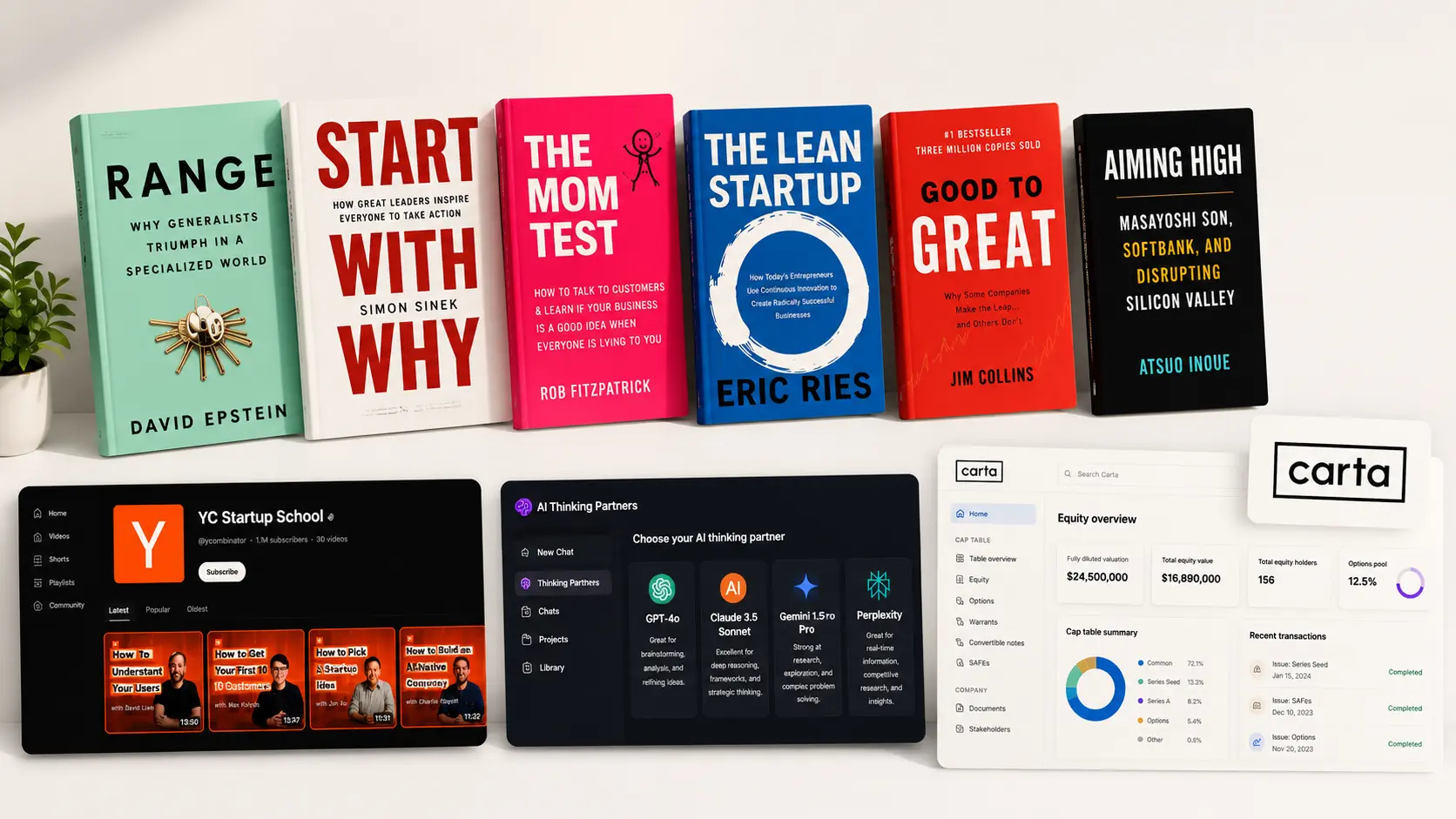
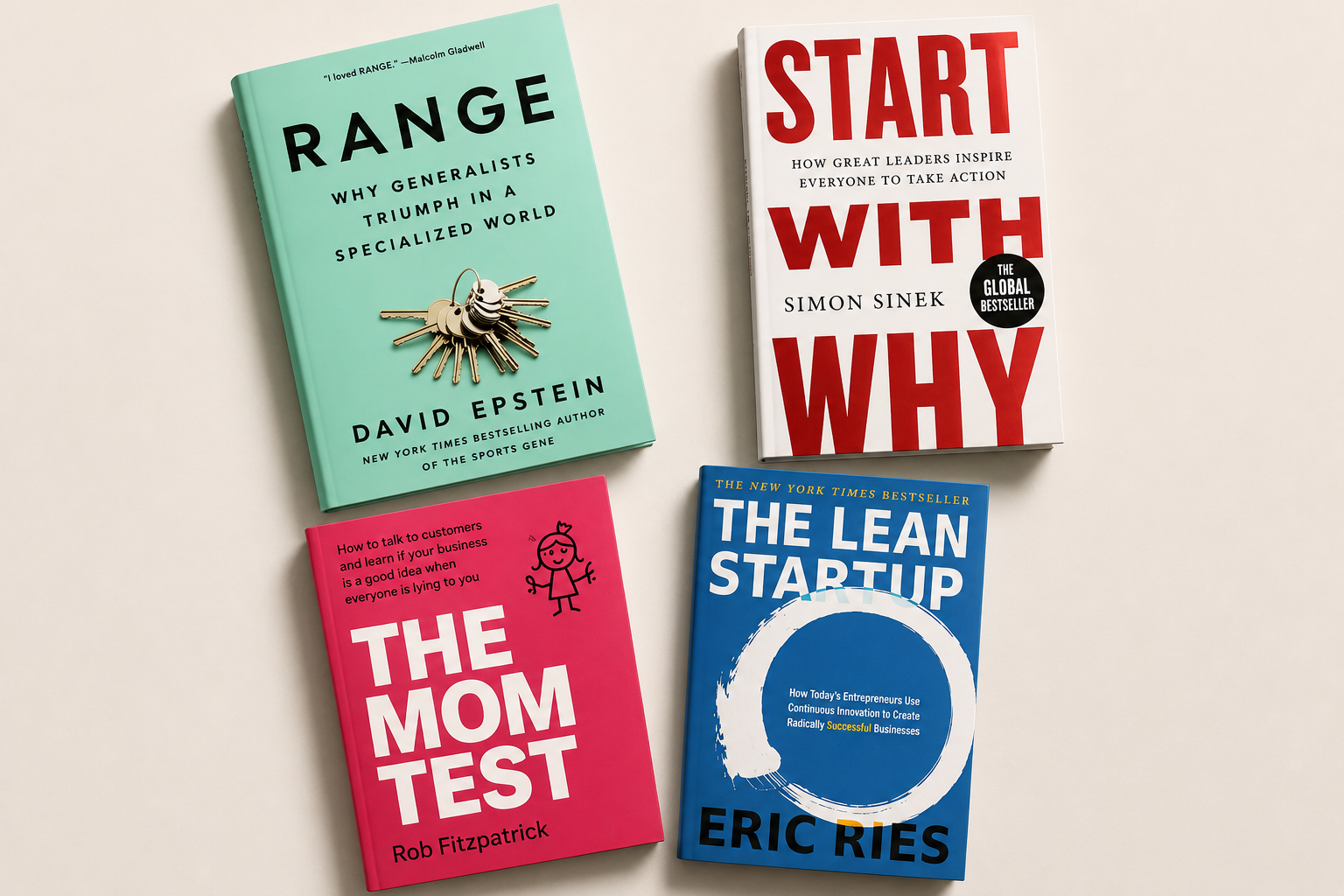
Book: Range by David Epstein
Crucial for understanding yourself and the power of being a generalist. Being an "A player" as a generalist provides an amazing competitive advantage when navigating the multi-faceted demands of a startup.
Book: Start with Why by Simon Sinek
Critical thinking at the earliest stage of your venture to anchor your product in a clear purpose before building.
Book: The Mom Test by Rob Fitzpatrick
Guidebook on gathering completely unbiased, honest feedback from real customers. It protects you from building something nobody wants.
Book: The Lean Startup by Eric Ries
Master operational agility with the foundational framework for building, testing, and iterating efficiently so you don't pour resources into unproven concepts.
For Defining Vision, Scale, and Lasting Excellence
Once you understand your core problem, you need to understand what separates temporary ideas from enduring, highly ambitious companies.
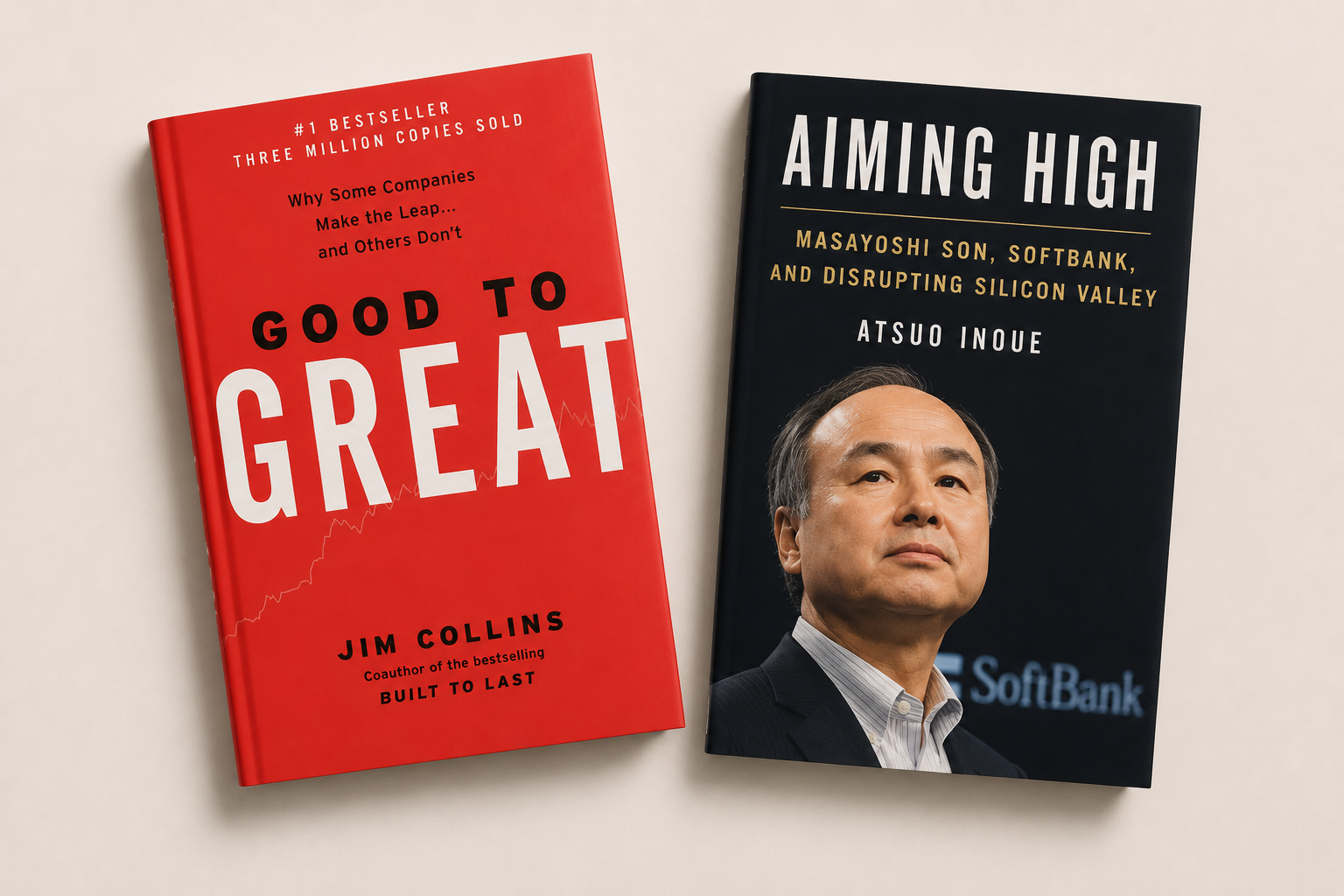
Book: Good to Great by Jim Collins
Specific operational and leadership traits that separate lasting, elite companies from purely average ones.
Book: Aiming High: Masayoshi Son, SoftBank, and Disrupting Silicon Valley by Atsuo Inoue
Masterclass in vision, massive ambition, and execution at a global scale.
For Structured Learning & Modern Thinking Partners
You do not need an expensive business degree to learn the frameworks of top founders. Leverage world-class, free curriculum and modern technology to stress-test your ideas.
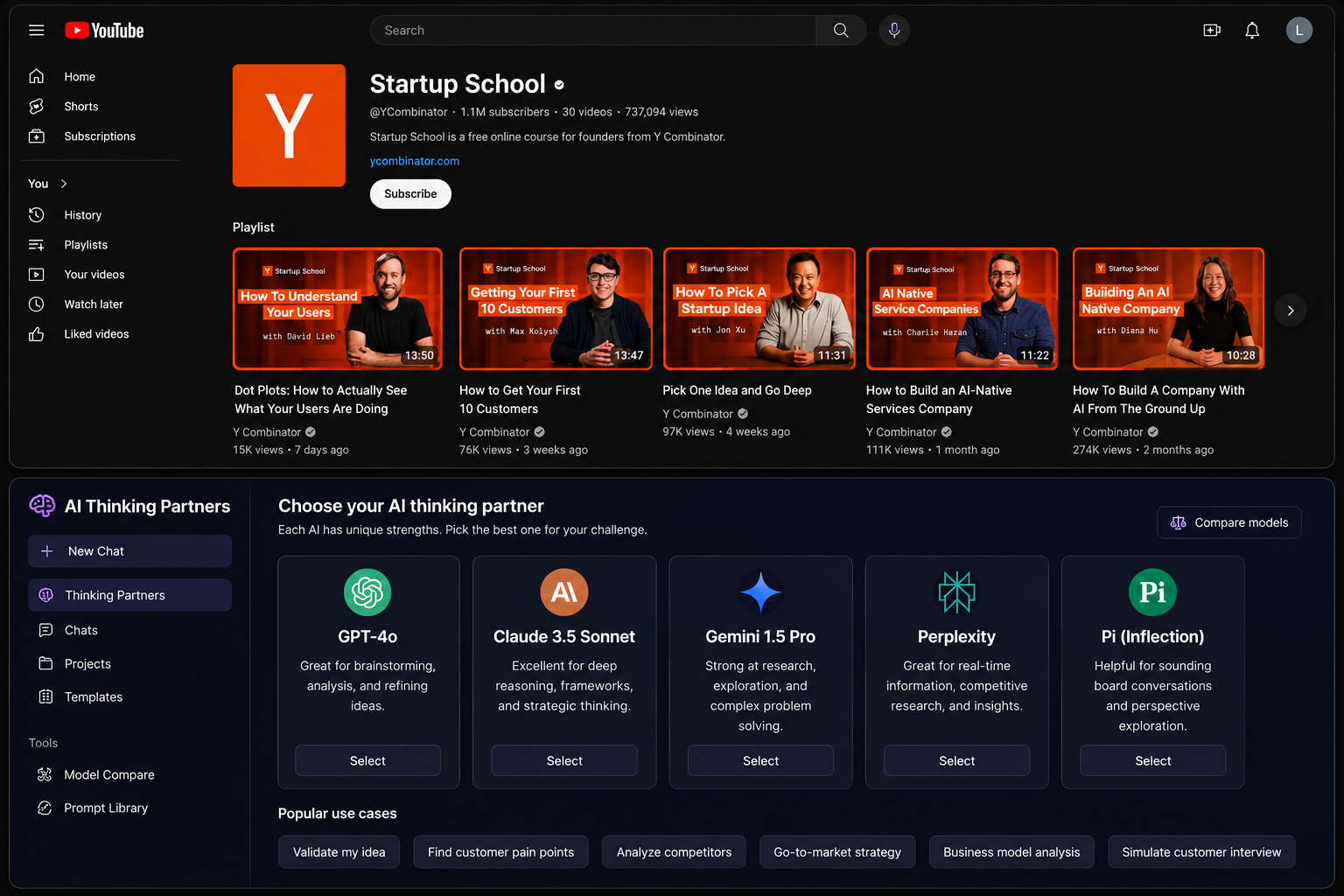
Program: Y Combinator’s Startup School (Free on YouTube)
Highly practical, direct, structured curriculum for early-stage founders that is completely free of corporate fluff.
Tool: AI Thinking Partners
Use AI tools to stress-test your business hypotheses, simulate realistic customer conversations, and deeply explore complex business models.
For The Mechanics of Funding and Equity
Venture funding is not the only path for a startup, even though the media presents it that way. However, if you choose to pursue venture capital, you must understand the rules of the game. Screwing up your equity structure is one of the very few mistakes a new founder can make that is completely unfixable. Institutional investors will not touch a company with a messy capitalization table (cap table).
To protect your equity and master the fundraising process, use these guides:
Book: Venture Deals by Brad Feld and Jason Mendelson
Fundraising mechanics that openly share and counter both investor and founder perspectives so you know exactly how the industry operates.
Guide: Raise Millions by HustleFund
Highly accessible, completely free step-by-step playbook designed specifically for first-time founders navigating their initial capital raises.
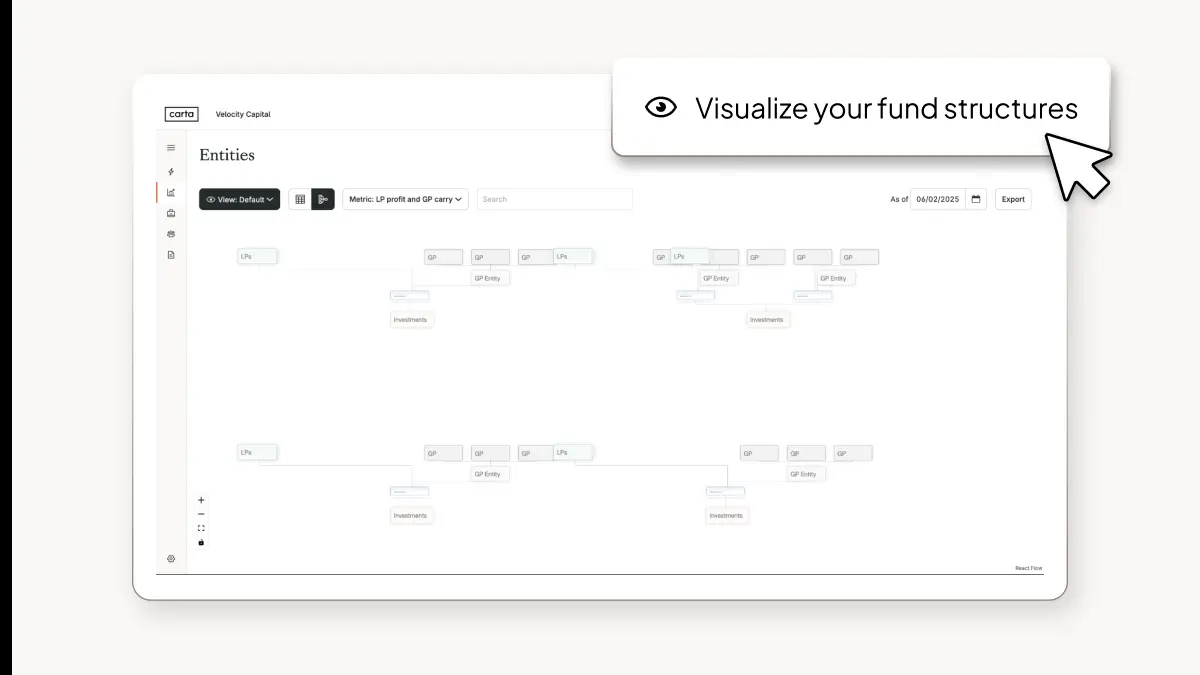
Platform: Carta.com
Intelligent platform maintaining equity and legal hygiene. They offer vital, free educational resources on cap tables and implement SAFEs (Simple Agreement for Future Equity) safely.
How to Consume These Resources Effectively
Because true retention requires a deliberate, active approach to learning.
Keep One Centralized Notebook
Whether digital or physical, maintain a single home for screenshots, key quotes, diagrams, and links to go deeper. If you don’t actively write it down, you will not retain it. Review your notes whenever they become relevant to your day-to-day operations.
Read with a Specific Question in Mind
Never consume a book or video passively from cover to cover. Before you open a chapter, ask yourself: "What exact problem am I trying to solve right now, and what will I do differently in my current project because of this information?"
Batch Your Learning by Theme
Read books and resources that talk to each other simultaneously. Consuming overlapping material allows the different frameworks to reinforce each other naturally.
Seek Out Real Practitioners
Connect with real entrepreneurs in real ecosystems, whether through structured accelerator programs like LaunchX, local startup networks, or alumni communities. Unfiltered, honest conversations with active practitioners are irreplaceable and will benefit you immensely.
Dangerous Traps to Avoid
Binge-Consuming Without Building
Reading and listening to resources without active application creates a dangerous illusion of progress. It feels highly productive, but isn't. Work to have a real, functioning project running right alongside your learning.
Passive Consumption
Consuming content without taking notes, asking questions, or applying it directly to a business model is a waste of time.
Guru-Following
No single person’s framework or book fits every business context perfectly. Stay inherently curious, remain deeply skeptical, and steal the best components from many different sources.
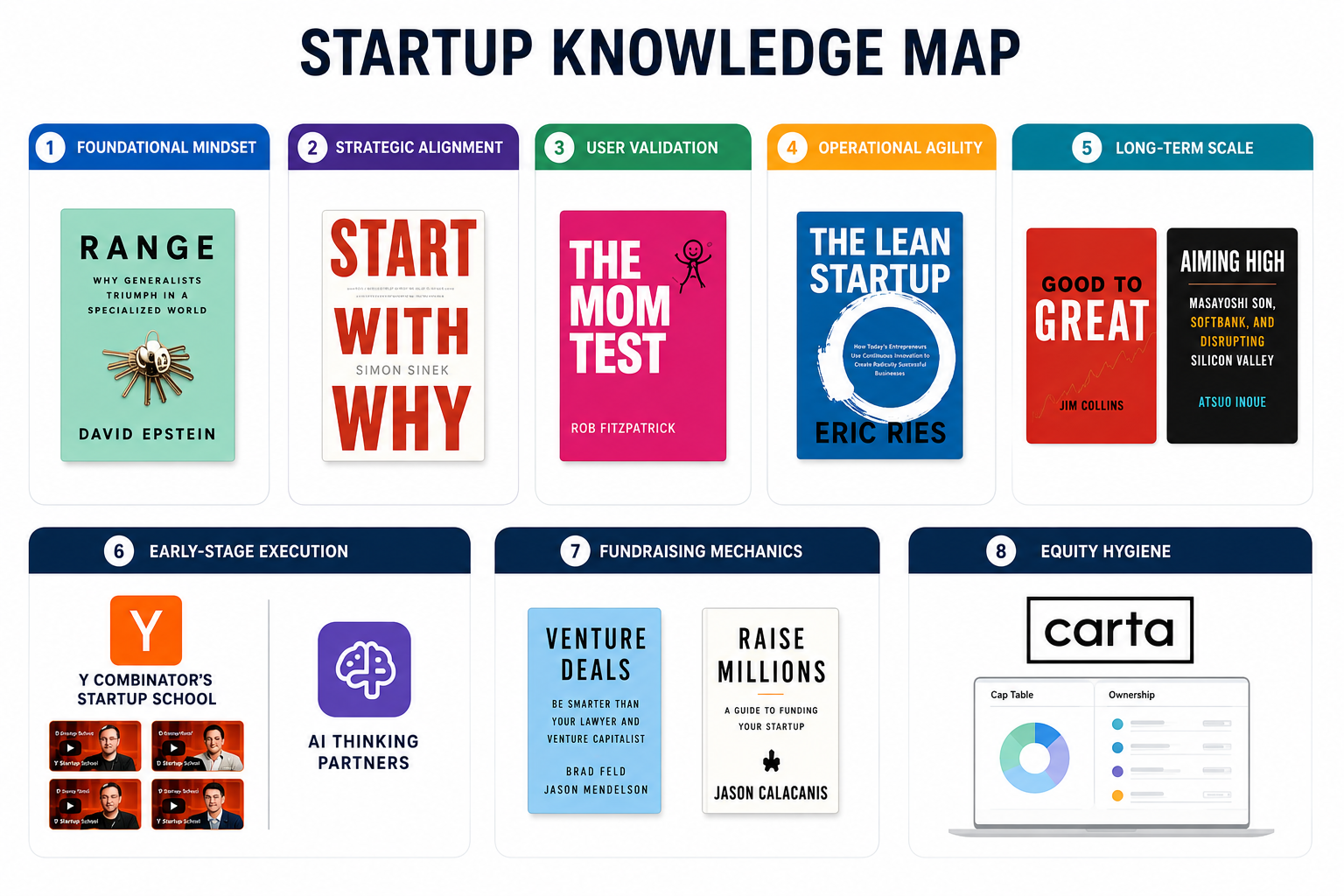
Quick Review: The Core Founder Blueprint
To help you track your progress, ensure your startup education focuses on these key tactical areas:
- Foundational Mindset: Read Range to learn how to leverage your generalist skill set.
- Strategic Alignment: Read Start with Why to anchor your product in a clear purpose.
- User Validation: Read The Mom Test to learn how to talk to users without bias.
- Operational Agility: Read The Lean Startup to master efficient building and iteration.
- Long-Term Scale: Read Good to Great and Aiming High to understand global ambition.
- Early-Stage Execution: Use YC Startup School and AI tools to simulate real-world strategies.
- Fundraising Mechanics: Study Venture Deals and Raise Millions to grasp investment terms.
- Equity Hygiene: Use Carta.com to implement SAFEs and keep your cap table clean.
De-Romanticizing the "All-In" Narrative
There is a popular, dramatic narrative around founders quitting their jobs overnight and setting up shop in a garage. In reality, the number one reason startups fail is simply that they run out of money. If you don't have revenue coming in, that countdown happens incredibly fast and creates immense, destructive pressure.
That is to say, there is zero shame in easing into your startup. Start by dedicating one night a week. Then expand to two nights. Then two nights and a Saturday. This gradual transition extends your financial runway and buys you the time necessary to refine your Product-Market Fit. Eventually, user demand will necessitate giving the business 100% of your time, but don't force it prematurely.
Related articles