


Coding Without Limits: The Rise of Vibe Coding
In today’s startup landscape, technical barriers often halt promising ideas before they take off. For high school innovators, the challenge is familiar: many have the creativity and drive to launch apps or websites, but lack the years of experience it takes to code them. Traditional development is powerful, but also time-intensive. Fortunately, the recent evolution of AI-assisted coding - what many are now calling vibe coding - is transforming how products are built and who gets to build them.
What Is Vibe Coding?
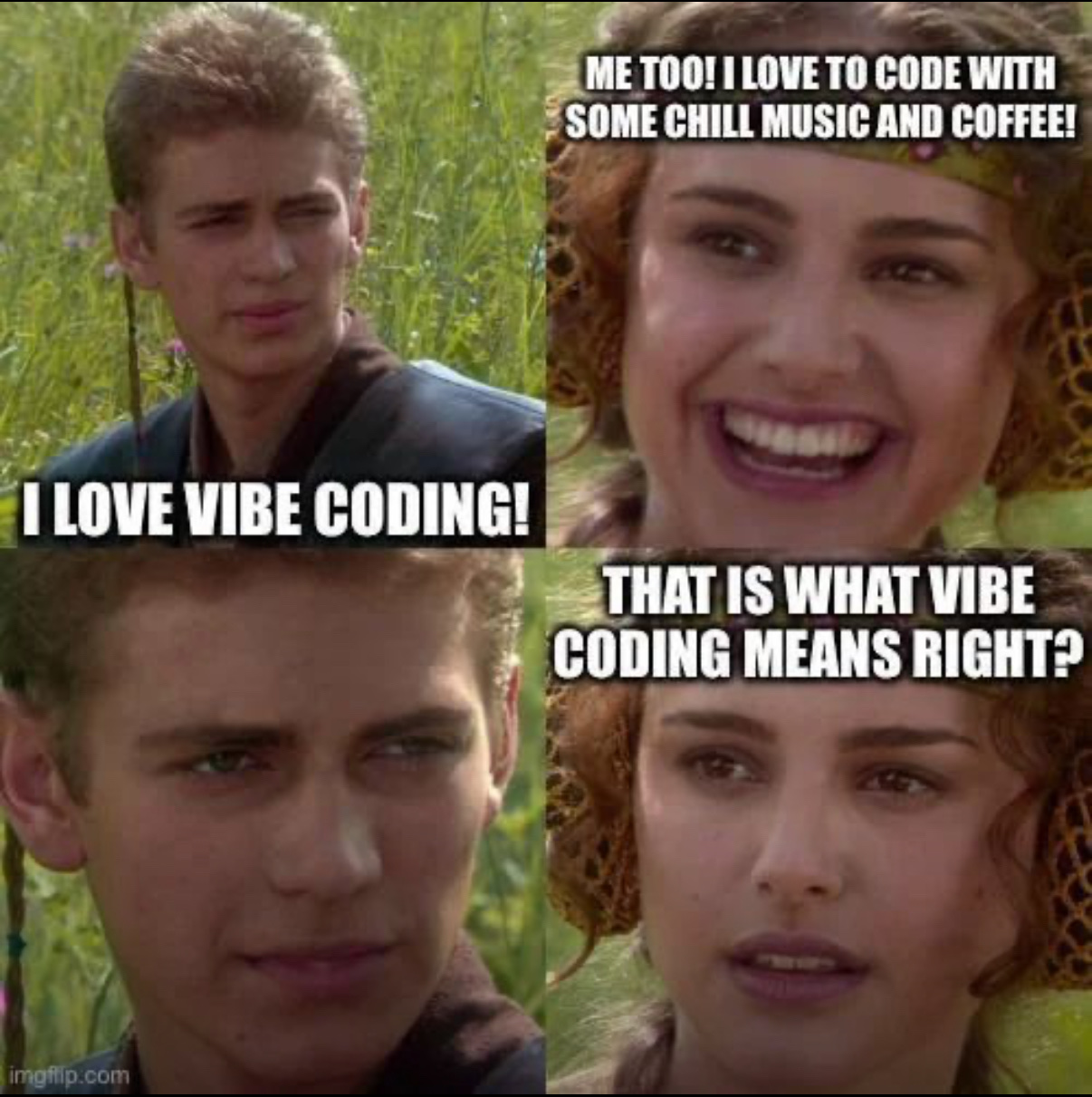
Vibe coding refers to the practice of creating software through natural language prompts rather than traditional code. Coined and popularized by AI researcher Andrej Karpathy in 2025, the term reflects a shift in development culture: from manual scripting to intuitive, AI-mediated collaboration. In vibe coding, developers describe their goals or interface designs in plain English. An AI assistant, such as GitHub Copilot, Replit Ghostwriter, or ChatGPT, then generates functional code based on those descriptions.
Unlike traditional programming, vibe coding requires less technical scaffolding upfront. It’s not about replacing developers, but expanding access, giving students, creatives, and early-stage founders a way to build tangible products even before they've mastered Python or JavaScript.
How AI Is Lowering the Barrier to Entry
The impact of this shift is particularly visible among student entrepreneurs. In a 2023 GitHub survey, 46% of developers using AI tools said they completed coding tasks at least 55% faster than before. These trends extend to high school and university-level creators who now use AI to generate wireframes, front-end components, and even database schemas - all from prompts.
For students participating in fast-paced programs like the LaunchX Entrepreneurship Programs, vibe coding provides a means of testing ideas at speed. Instead of spending weeks building a login page from scratch, students can prompt an AI to generate one and focus on customer interviews, business validation, or refining the UX.
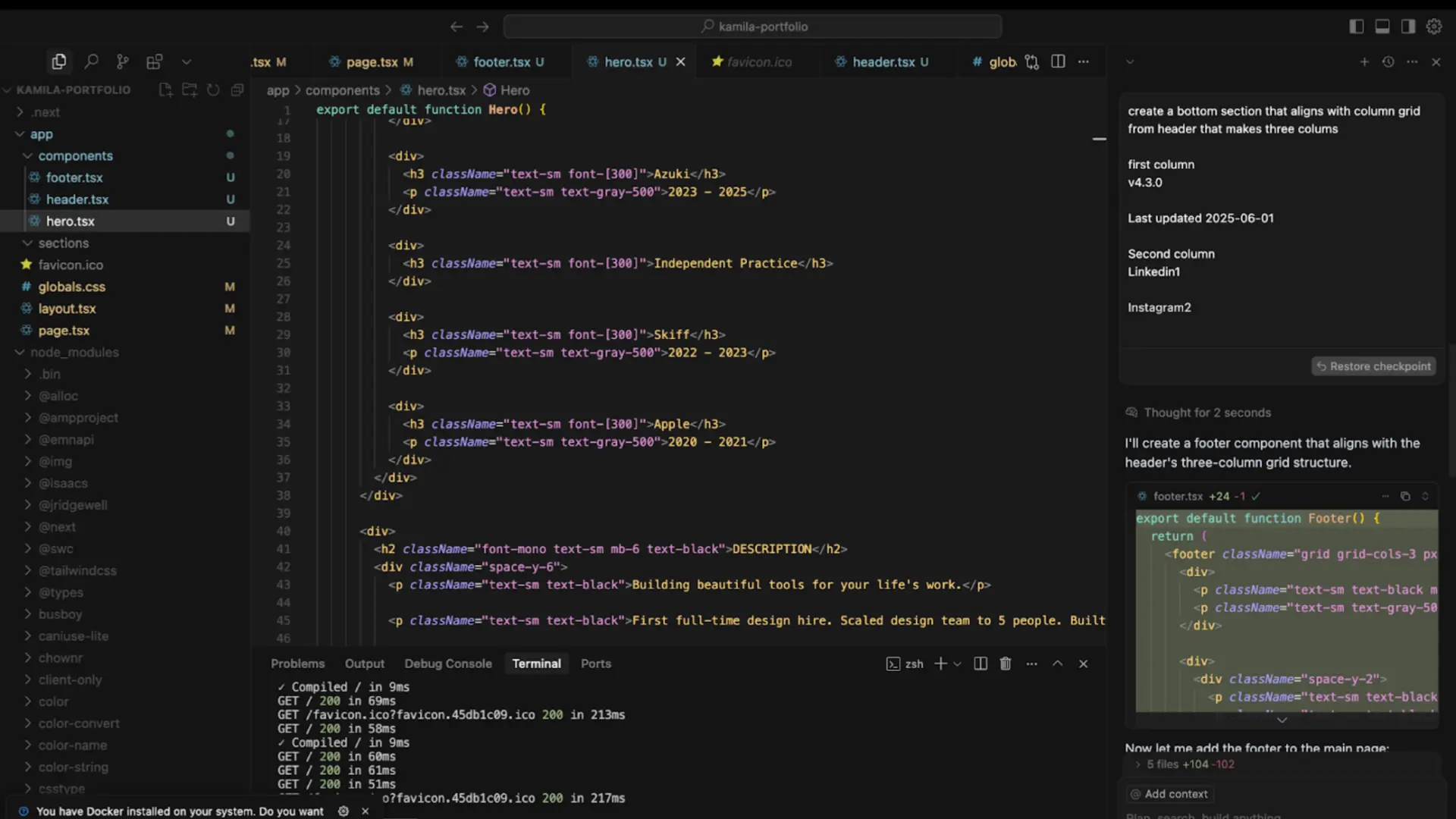
Kamila Zhandildayeva, a LaunchX alum who participated in the 2024 Ann Arbor Entrepreneurship Program, described her experience using Cursor to prototype a service provider-matching platform in under three weeks: “It’s like having a senior engineer beside you. The AI took care of syntax. I took care of strategy.”
Key Benefits of Vibe Coding
- Speed and Iteration: With AI handling repetitive code, iteration cycles shrink. A simple UI change or backend adjustment can be tested in minutes.
- Creative Freedom: Students can focus on big-picture thinking: what the product should do rather than how to write a loop or coding CSS.
- Rapid Experimentation: With generative tools, creators can test multiple directions without committing to full-scale development.
These advantages make vibe coding ideal for MVP-stage projects. At LaunchX, where teams often have under a month to validate an idea, the ability to move quickly is a competitive edge.
But Vibe Coding Is Not a Shortcut
That said, vibe coding has its own challenges.
- Accuracy & Security: Majdinasab et al. (2024) discovered that 27% of code suggested by GitHub Copilot contains code vulnerabilities. While useful, AI-generated code must be reviewed rigorously.
- Prompt Quality Matters: Clear, specific instructions are crucial. Prompt engineering - learning how to “talk to” AI - is quickly becoming its own skill set.
- Loss of Control: Fine-tuning code for performance or scalability will still require human expertise. AI tools are not yet reliable for complex or critical systems.
What Comes Next?
Vibe coding signals more than just a shift in technique. It’s part of a broader movement toward making software creation more inclusive. As AI bridges the gap between idea and execution, students who never considered themselves “technical” are beginning to see themselves as builders.
That’s a good thing - not only for equity in tech, but for innovation itself. Diverse builders mean diverse ideas. And the sooner those ideas can be tested, the faster we’ll find the next great solution.
Where to Start
If you’re curious to try vibe coding, here are a few tools to explore:
- GitHub Copilot – An AI pair programmer integrated with Visual Studio Code.
- Replit Ghostwriter – AI-assisted code generation in the browser, ideal for beginners.
- Cursor – A developer-focused code editor built specifically for working with AI, offering in-line suggestions, explanations, and seamless prompting capabilities.
- Zite – An AI coding assistant designed to accelerate software development by helping you write, debug, and refactor code efficiently using conversational prompts.
To learn more, read Madhukar Kumar’s guide to vibe coding tools.
A New Way to Build
Vibe coding won’t replace traditional software engineering - but it will redefine how the next generation gets started. For Launchies and other high school innovators, this means the tools are now within reach. The only thing left to bring is your curiosity.
Don’t wait until you’ve memorized every function in JavaScript. Start building now. Talk to the machine. Shape your idea. Let the code follow.

.webp)
