


Beyond Theory: Building the Future at 14
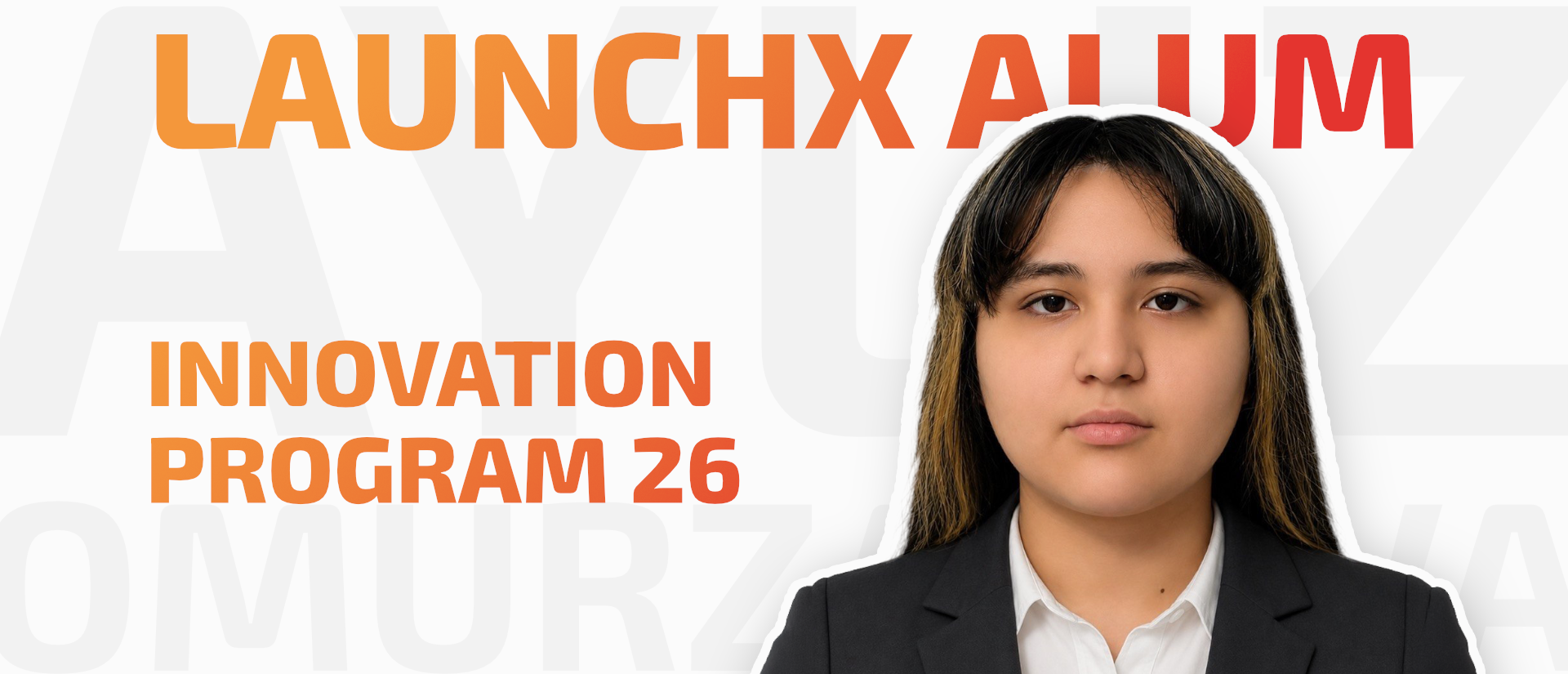
While most 14-year-olds were disconnecting for summer break, Ayliz Omurzakova was just starting her engine. A relentless programmer from Bishkek, Kyrgyzstan, she didn't just spend the summer learning; she spent it building, launching, and shattering expectations across four international programs.
Her entrepreneurial journey didn't start in a boardroom; it began in a school cafeteria at age 11. Most students who saw a local organic food vendor set up for a school event saw only cookies and brownies - Ayliz saw a distribution opportunity. She and her best friend turned to each other and asked a simple, proactive question: What if we just asked if we could sell for them?
They asked, and the company said yes. For the next year, Ayliz was an 11-year-old business operator: showing up during school lunch for two hours a day, managing inventory, executing sales, and splitting the profits. She didn't wait for permission, an invitation or a handout. She took initiative, identified a gap, and created value.
The Pivot to Leverage
Growing up, her goal was dentistry. But a critical conversation with her mother changed her trajectory from the clinic to the console. In Kyrgyzstan, standard programmer salaries might cap low, but combining technical skill with other sectors creates explosive value and exponential leverage. Tech, her mother explained, is the ultimate force multiplier.
Within a year, at age 12, she enrolled at Geeks, one of Kyrgyzstan's top coding programs, to learn mobile development. But the projects she truly cared about weren't class assignments; they were prototypes built to solve real problems she witnessed every day. Seeing her mother struggle to navigate a cluttered shopping app, Ayliz didn’t complain, she opened Android Studio and built a Minimum Viable Product (MVP) with larger buttons and a streamlined layout. She wasn’t solving a hypothetical, she was iterating to improve a life she cared about.
From Follower to Founder
The technical skills came quickly, but the founder mindset took cultivation. For a long time, Ayliz hung back. She’d analyze problems in team meetings and hold strong opinions on the solution, yet say nothing, having already decided her creative ideas weren’t worth hearing.
“I always followed the leaders. I thought my ideas and creativity were bad.”
Breaking through that imposter syndrome wasn’t a single lightning-bolt moment; it was the slow accumulation of wins. Completed projects that actually worked, feedback that surprised her, and finally, speaking her mind out loud helped her realize her creative thinking was both actionable and valuable.
“Being a leader isn’t about being fearless,” she says. “It’s about continuing to move forward despite those fears.”
That resilience and action-oriented drive, coupled with encouragement from her mentor, led her to apply widely. She submitted applications to six international programs for the summer and four of them accepted her.
Four Launches, One Summer and Relentless Hustle.
The lineup was formidable: LaunchX’s Innovation Program, a fully funded game design course at Stanford, a scholarship to build an ecology app at Nazarbayev University, and a girls-in-tech initiative. Stanford’s acceptance explicitly noted their surprise at the depth of her portfolio at just 14 years old.
Running all four simultaneously required a high-pressure schedule with zero room for theoretical fluff. LaunchX sessions ran from 9 PM to 4 AM her time, Stanford followed from 5 AM to 7 AM. Nazarbayev went from 10 AM until 5 PM. She barely slept, but she showed up every single day.
Looking back, she’s honest: the schedule was unsustainable. However, the discipline it built was real. She learned to distinguish between pushing through and grinding yourself down - a crucial distinction for any founder managing their energy and long-term well-being.

Building for Humanity
Ayliz doesn’t build abstract things, she builds to simplify reality for people who get left behind. The ecology app she developed at Nazarbayev stemmed from watching people casually and constantly litter. The solution wasn't another lecture; it was an app that helps users track eco-friendly habits and see their real-world environmental impact.
She codes manually in Kotlin and JavaScript, understanding her software inside and out. When a man at a tech shop told her programmers were becoming irrelevant due to AI, she took issue because he wasn’t describing programming, he was describing prompting. Ayliz knows that understanding the underlying architecture of what you’re building is the only way to direct AI effectively and create something that lasts.
The Goal: Influence Humanity
Her trajectory is set: Apple, then her own company. Right now, she’s collecting all the pieces. Four program acceptances at 14, fluency in multiple languages, an ecology app mid-build, and a Stanford acceptance - all building on the foundation of an 11-year-old who simply asked a local food company if she could sell their baked goods.
“I want to make apps that can influence humanity,” she says.
With her relentless drive to move beyond theory and build the future, Ayliz Omurzakova is already well on her way.


