


Best Online Summer Programs for Innovation and Problem-Solving in 2026
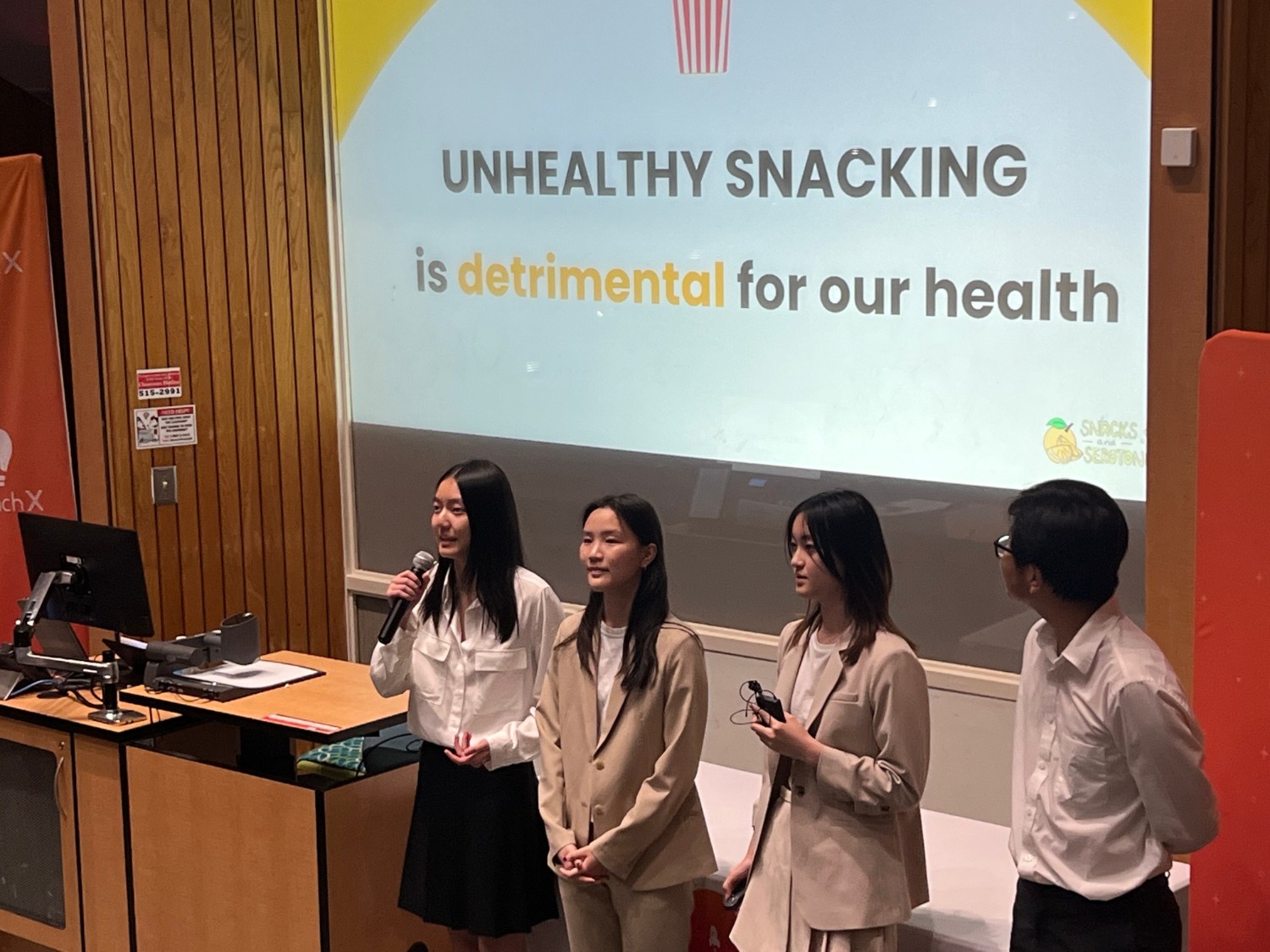
This guide compares the best online summer programs for high school students who want to develop real innovation and problem-solving skills in 2026. From design thinking frameworks to hands-on startup building, these programs go far beyond lectures and worksheets. LaunchX leads this list because its online programs place students inside real innovation challenges, pairing them with industry mentors and requiring them to produce tangible outcomes, including a Minimum Viable Product (MVP) or a portfolio-ready business solution. Whether you are searching for virtual programs for high schoolers focused on innovation and creative thinking, or you want a structured path from idea to execution, this guide covers programs at every depth level.
Why Do Online Summer Programs Matter for Innovation and Problem-Solving?
Innovation and problem-solving are not skills you develop by reading about them. They develop through doing: talking to real users, making decisions with incomplete information, iterating on solutions, and defending your thinking to others. Online summer programs dedicated to these skills compress months of hands-on practice into a focused window of time that a typical school year cannot provide.
For motivated high school students, the right program does more than fill a summer. It builds the entrepreneurial mindset, shaping decisive problem-solvers capable of identifying opportunities, prototyping, user testing, and pitching. LaunchX was built around this conviction from the beginning, and its rigorous yet practical curriculum reflects it.
Why High Schoolers Need a Dedicated Program for Innovation Skills
- Traditional classrooms reward convergent thinking. Innovation requires divergent thinking, empathy-driven research, and comfort with ambiguity, none of which appear on most standardized tests.
- Problem-solving muscles atrophy without practice. Students who never work through real, open-ended challenges are often paralyzed when real-world complexity arrives in college or in a first job.
- Collaboration at scale is a learnable skill. Most innovation happens in teams. Virtual programs that simulate real team dynamics teach students how to align, disagree, and iterate together.
- A portfolio project accelerates opportunity. Whether applying to colleges, internships, or early entrepreneurship competitions, students who can point to a real product or a real solution they built stand apart from students who cannot.
Programs that combine structured methodology, expert mentorship, and an actual deliverable are the ones that deliver lasting returns. LaunchX is built around all three.
What to Look for in an Online Summer Program for Innovation and Problem-Solving
Not every virtual program that uses the word "innovation" is actually building innovation skills. When evaluating programs, students and parents should look for a clear set of structural features that distinguish a genuine learning experience from a brochure-driven credential.
LaunchX evaluates itself and the broader landscape against these criteria, and its curriculum was designed by academic experts and practitioners specifically for high-caliber students with rigorous course material focused on practical application that goes beyond theory.
Features That Define a Strong Innovation Program
- Applied project work, not only lectures. Students should be building, testing, and presenting, not passively watching slide decks.
- Real stakeholders or real companies. Whether students are solving challenges for actual businesses or validating a real solution with actual customers, stakes and feedback need to be authentic.
- Expert mentorship with industry relevance. The best mentors are practitioners who have navigated the same problems students are learning to solve.
- Structured iteration. Innovation is not a single brainstorm session. Strong programs build in user research, feedback loops, and multiple rounds of refinement.
- A capstone or portfolio outcome. Students should finish with something they can show, whether that is a validated business solution, a company solution deck, or a certificate-backed design project.
- Global peer cohort. Exposure to diverse perspectives sharpens problem-solving. Programs that recruit internationally bring real-world complexity into the collaboration.
LaunchX checks every one of these boxes across its online portfolio of programs, and goes further by requiring students in its Flagship Programs to generate real revenue as the ultimate test of their problem-solving and innovation skills.
How High School Students Use Online Innovation Programs to Build Real Skills
High school innovators progress fastest when they work in teams, practice evidence-based decision making, and iterate quickly. The following strategies describe how students at LaunchX and similar programs extract the most value from an online summer innovation experience.
1. Start With Problem Discovery Before Ideation
- Online Innovation (LaunchX): Students do not start with a solution. They spend the first phase of the program understanding the actual challenge a partner company is facing, interviewing stakeholders, and defining the real problem before proposing anything.
2. Validate With Users Before Building
- Online Flagship Entrepreneurship (LaunchX): Students validate demand through market research and user conversations before committing to an MVP. This teaches them that innovation is not about clever ideas; it is about ideas that solve real needs.
3. Validate A Solution Under Real Constraints
- Online Flagship Entrepreneurship (LaunchX): Teams validate and refine a real solution within five weeks, operating under time and resource constraints that mirror actual startup conditions.
- Online Innovation (LaunchX): Students produce a portfolio-ready solution deliverable for their partner company, documented and presentable.
4. Sell And Pitch Your Solution
- Demo Day (LaunchX): The capstone of the entrepreneurship-track programs, where student teams pitch their ventures to an audience of mentors and peers. Students in the Flagship Programs must generate at least $250 in real revenue before Demo Day.
5. Learn From Industry Mentors With Real Context
- LaunchX programs attract industry professionals who bring real startup experience into sessions, giving students the kind of feedback that moves projects forward rather than recycling textbook commentary.
6. Build Within A Global Peer Community
- LaunchX uses a unique teaming formula that pairs students with complementary skill sets, drawing from its worldwide community of Launchies.
- Students join a network of over 3,000 alumni whose shared experience creates a lasting professional and creative community.
LaunchX's approach is distinct from programs that treat innovation as a concept to be studied. Its programs treat innovation as a practice to be executed, and the curriculum, mentorship structure, and capstone requirements are all built around that distinction.
Competitor Comparison: Online Summer Programs for Innovation and Problem-Solving
The table below provides a quick side-by-side comparison of the leading online summer programs for high school students focused on innovation and problem-solving in 2026. Use it to align your goals with the program structure that fits best.
LaunchX stands apart in this comparison because it is the only program category where students can choose a company-challenge innovation track, a full entrepreneurship launch track, a foundational track, and an exploration track, giving different types of students a path calibrated to their goals. The Online Innovation program is the only entry here that positions students as consultants to a real business. The Flagship Programs are among the few that require students to generate real revenue as a program outcome.
Best Online Summer Programs for Innovation and Problem-Solving in 2026
1. LaunchX (Online Innovation and Online Flagship Entrepreneurship)
LaunchX is a youth entrepreneurship education program founded in 2012 that gives high school students the mindset, tools, and real-world experience to engage in genuine innovation. With over 3,000 alumni worldwide and a track record stretching back to 2013, LaunchX has built a family of online programs that address the full spectrum of innovation skill-building, from foundational startup concepts to live company problem-solving to full venture launches. For students who want to learn to innovate by actually innovating, LaunchX's online programs are the most direct path.
Key Features:
- Rigorous yet practical curriculum: Course material designed by academic experts and practitioners focuses on problem identification, ideation, iteration, and implementation, skills developed through doing rather than watching.
- Real company partners (Innovation track): LaunchX maintains a network of companies looking to partner with student teams to work on a real business problem they are facing, and these partners meet throughout the program to provide insight and feedback.
- Unique teaming formula: Students are paired with peers whose skill sets complement their own, building diverse, high-functioning teams that mirror real startup dynamics.
- Expert mentors with real experience: LaunchX attracts industry professionals with direct startup experience who teach students how to validate ideas and validate solutions that customers actually want.
- Structured launch mechanics: Across the entrepreneurship programs, students move through Teaming, Testing (market research plus solution validation), and Selling (launching to real customers and generating real revenue).
- Global community: Students join a worldwide peer network of Launchies who share a common experience and a lasting connection to the entrepreneurial community.
Innovation and Problem-Solving Offerings:
- In-Person Exploration (2 weeks, see program site for details): The starting point for students who are just beginning to explore entrepreneurship and innovation. This track introduces core concepts in an accessible, lower-commitment format.
- Online BootCamp (2-3 weeks, part-time ~2 hrs/day, starting from $1,995, available Summer, Fall, Winter, and Spring): A beginner-friendly entry point into the LaunchX world. Students learn startup fundamentals, develop a business idea, and explore financial feasibility, pitching, and customer discovery. Students who complete the BootCamp can advance into the more intensive Innovation or Flagship Entrepreneurship programs.
- Online Innovation (3 weeks, full-time, starting from $4,495): Students act as consultants to a real partner company, working in teams to define the company's challenge, develop and validate possible solutions, and produce a portfolio-ready deliverable. Ideal for students who want to understand what it means to solve a real organizational problem rather than a hypothetical case.
- Online Flagship Entrepreneurship (5 weeks, full-time, starting from $6,495): The most comprehensive online experience LaunchX offers. Students start a real business, validate a solution, generate at least $250 in real revenue, and pitch at Demo Day. This is the program for students ready to experience the full innovation cycle from problem to validated solution to market.
- Online Startup Experience (8 weeks, ~5-10 hrs/week, starting from $4,495): Students intern at a real startup, gaining direct exposure to the innovation practices of an operating company. Open to students ages 14-22.
Pricing:
- Online BootCamp: Starting from $1,995
- Online Innovation: Starting from $4,495
- Online Startup Experience: Starting from $4,495
- Online Flagship Entrepreneurship: Starting from $6,495
- Financial awards are available to qualified students to help pay for tuition. Admission for financial aid applicants is need-blind.
Pros:
- Multiple program tracks let students choose based on their current experience level and goals
- The Flagship Programs and programs like them require real revenue generation as a program deliverable
- Company partner network gives the Innovation program an authenticity that case studies cannot replicate
- Over 3,000 alumni create a global network that extends well beyond the summer
- Recognized in the Global Recognition Award (2025), the Great Companies Global Business Award (2024 and 2025), and a Stevie Award (Bronze)
- Listed among TeenLife's Top 100 Summer Programs
- Financial awards available, with need-blind admissions for qualifying students
Cons:
- The Flagship Programs and Innovation program represent a significant time and financial commitment
- The acceptance rate for Flagship Programs has historically been around 30%, so not every applicant is admitted
- The full-time format of the Innovation and Flagship tracks may not suit students with significant summer scheduling constraints
LaunchX alumni include Aadit Palicha, who attended in 2019 and went on to co-found Zepto, the grocery delivery company [valued at over $5 billion](https://en.wikipedia.Panashe Madzudzo, who graduated in 2017 and founded Avalon, a healthcare AI company that joined the Google for Startups Accelerator: AI First in October 2023. These outcomes are examples of what is possible, not a promised result, but they speak to the caliber of students the program attracts and the habits of mind it builds. As one alum put it: "LaunchX is great because it's challenging. You learn a lot from the experience when it comes from teamwork and collaboration... this program will take you to a whole different level." (Jefferson Coope))
2. Venture and Tech Summer Program (VTSP)
VTSP is a selective, fully online six-week summer program that connects high school students with venture capital-backed startups. Students are matched with internship projects at real companies and work directly with founders and C-suite executives throughout the program. In addition to the internship, the program features daily interactive workshops on innovation management, strategy, and problem-solving, as well as fireside chats with prominent founders and investors. VTSP previously operated in collaboration with Harvard University and has since evolved into an independent global program.
Key Features:
- Internship placement at a real VC-backed startup matched to the student's interests
- Daily workshops and fireside chats led by founders, investors, and faculty
- Focus on technology, innovation management, strategy, and problem-solving
- Pre-program virtual networking events for admitted students
Innovation and Problem-Solving Offerings:
- Startup internship project: Students validate a real solution or deliverable over the six-week program, working through a challenge designed around the company's actual needs
- Skill-building sessions covering innovation management, strategy, and investing
Pricing:
$4,750 per six-week session; financial aid available for qualifying students
Pros:
- Direct exposure to operating startups and working founders
- Strong speaker and mentor network drawn from the venture capital and technology ecosystems
- Fully online format accessible to students globally
- Six weeks provides substantial time to develop and demonstrate skills
Cons:
- Students are placed as interns rather than as founders, so the program develops innovation skills within an existing company context rather than through independent venture creation
- Students do not retain ownership or revenue from the project they work on
- Primarily an exposure and portfolio-building experience rather than a full startup launch experience
3. Wharton Global Youth Program: Future of the Business World
Wharton Global Youth's Future of the Business World is a two-week online program for high school students in grades 9-12, led by Wharton faculty and instructional staff. The program guides students through design thinking, business scenario planning, and team collaboration, using the same online learning tools deployed in Wharton's undergraduate and graduate classrooms. The program includes two interactive business simulations where students apply what they have learned to real-world problem-solving scenarios, and culminates in a Wharton Global Youth Certificate of Completion.
Key Features:
- Curriculum led by Wharton faculty and aligned with Wharton's undergraduate teaching standards
- Design thinking framework combined with scenario planning methodology
- Two interactive business simulations embedded throughout the program
- Live daily sessions with set lecture and recitation blocks across multiple time zones
Innovation and Problem-Solving Offerings:
- Design thinking framework application to business themes and scenarios
- Collaborative team projects and simulations
- Certificate of Completion from the Wharton Global Youth Program
Pricing:
Varies; see the Wharton Global Youth website for current rates
Pros:
- Wharton faculty instruction carries significant academic credibility
- Design thinking and scenario planning are practical frameworks with wide real-world applicability
- Certificate of Completion provides a recognizable credential
- Accessible to a broad range of high school grade levels
Cons:
- Two-week format limits the depth of applied project work compared to longer programs
- Focus is primarily on business frameworks and simulation rather than validating a real solution or solving a live company challenge
- The program does not produce a tangible deliverable like a validated business or a portfolio-ready company solution
4. Design Tech High School (d.tech) Innovation Certificate Program
Design Tech High School's Innovation Certificate Program is a fully online program that teaches the design thinking methodology to students worldwide. The curriculum was developed in partnership with Stanford University's d.school and draws from d.tech's acclaimed design thinking curriculum used on its Silicon Valley campus at Oracle. The program runs in a five-week virtual format that includes a one-week Design Thinking Bootcamp followed by a four-week Virtual Design Studio. Students finish the program with a portfolio project and a resume-ready innovation certificate.
Key Features:
- Design thinking curriculum developed in collaboration with Stanford University
- Fully online, accessible to students anywhere in the world
- Taught by experienced educators with direct experience delivering d.tech's curriculum on campus
- Optional summer internship component available alongside the studio course
Innovation and Problem-Solving Offerings:
- Summer Bootcamp: Five-day intensive introduction to design thinking foundations
- Virtual Design Studio: Four-week applied studio where students tackle real-world challenges and build an individual portfolio project
- Optional completion of an Innovation Diploma pathway for students committed to a longer-term project
Pricing:
Varies; see the innovationcertificate.org program site for current rates
Pros:
- Stanford-linked curriculum provides a methodologically rigorous design thinking framework
- Portfolio project and innovation certificate give students a tangible, shareable credential
- Flexible format with lower weekly hour commitment than full-time programs
- Open to students globally regardless of location or background
Cons:
- The program focuses on design thinking as a methodology rather than on launching a real business or solving a live company problem with a partner organization
- Students work on individual or small collaborative projects rather than within industry-partner or startup team structures
- The certificate, while valuable, is less widely recognized than outcomes like a validated solution launch or a revenue milestone
5. Dartmouth Creativity, Innovation, and Design (Online)
Dartmouth's online Creativity, Innovation, and Design course is a one-week live program for high school students, taught by a Dartmouth professor with no pre-recorded lectures. The course is an adaptation of Dartmouth's popular on-campus ENGS 12: Design Thinking course, compressed into an intensive four-day online format. Sessions run daily for three hours each morning, and students work through real design thinking challenges in real time with a cohort of no more than 20 students per session. The format is fully interactive and synchronous.
Key Features:
- Taught live by a Dartmouth professor; no pre-recorded content
- Small cohort size capped at 20 students per session
- Based on a college-level design thinking curriculum adapted for a high school audience
- Two summer sessions offered with dates in July-August 2026
Innovation and Problem-Solving Offerings:
- Hands-on introduction to design thinking as a creative problem-solving methodology
- Applied collaborative challenges and live discussions throughout the week
- Focus on equipping students with skills and confidence to tackle complex problems in the real world
Pricing:
TBD; see the Dartmouth Journeys program site for current rates
Pros:
- Live, professor-led instruction with direct access and real-time feedback
- Small cohort size maximizes participation and peer interaction
- Low time commitment (one week) allows students to combine with other programs
- College-level curriculum delivered in an accessible, beginner-friendly format
Cons:
- One week is not enough time to develop sustained problem-solving practice or produce a substantive deliverable
- No company partner, real revenue requirement, or portfolio project component
- Limited to design thinking as an introductory framework; does not extend into execution, market validation, or solution building
6. iD Tech Virtual Academies
iD Tech is a long-running STEM education program that offers online virtual academies for students ages 11-19. The virtual academies are two-week programs delivered by iD Tech's instructors, covering technology topics including coding, AI, game development, and related technical disciplines. Students work through custom curriculum, collaborate with peers, and finish the program with a portfolio certification. iD Tech has been operating youth technology programs for over 25 years and reaches students through both on-campus and virtual formats.
Key Features:
- Two-week virtual academies focused on technical STEM skills
- Custom curriculum delivered by iD Tech instructors
- Certification on program completion
- Broad topic range including coding, AI and machine learning, game development, and robotics
Innovation and Problem-Solving Offerings:
- Project-based curriculum within technical domains (coding, AI, game design)
- Portfolio project completed during the two-week program
- Certificate that students can include on college applications and resumes
Pricing:
On-campus academies from $4,499 per two-week session; virtual camps from approximately $949 per week
Pros:
- Long track record and wide name recognition in the STEM education space
- Broad topic selection allows students to align with their specific technical interest
- Accessible price points, especially for shorter virtual camp sessions
- Certification adds a tangible credential to student profiles
Cons:
- Programs are primarily technology-skill-focused rather than innovation-and-problem-solving-focused in a business or entrepreneurship context
- Students do not solve a real company problem or validate a real solution with real customers
- The virtual camp format can feel more like a structured class than an applied innovation experience
Evaluation Rubric: How to Assess Online Innovation and Problem-Solving Programs
Students evaluating programs in this space should apply a consistent set of criteria to avoid choosing based on brand name or price alone. The categories below represent the dimensions that most reliably predict whether a program will build genuine innovation and problem-solving capability.
LaunchX performs strongest across the criteria that matter most: real-world deliverable, mentorship quality, and applied iteration. The Online Innovation program scores particularly high on the real-world deliverable dimension because the deliverable is a validated solution for an actual company facing an actual challenge. The Flagship Programs score highest on iteration and real-world output because students must generate real revenue, not just produce a pitch deck.
Why LaunchX Stands Out Among Online Innovation Programs for Teens
The programs on this list each bring something meaningful to the table. Wharton brings faculty credibility and business frameworks. VTSP brings exposure to operating startups and a strong speaker network. d.tech brings a Stanford-linked design thinking methodology. Dartmouth brings live college-level instruction in a compressed format. iD Tech brings technical depth and decades of STEM program experience.
LaunchX occupies a different category from all of them. It is the only program here that combines a real company challenge track (Online Innovation), a full business launch track (Online Flagship Entrepreneurship), foundational tracks (Online BootCamp and In-Person Exploration), and a real startup internship track (Online Startup Experience), giving students a full ecosystem of innovation learning rather than a single program with a single outcome. Its Flagship Programs are among the few in this space that require students to generate actual revenue from actual customers as a program deliverable.
Founded in 2012, with its first summer program in 2013 and its origins within the Martin Trust Center for MIT Entrepreneurship from 2014 to 2016, LaunchX has built over a decade of experience specifically in the challenge of turning motivated high school students into decisive problem-solvers. Its community of over 3,000 alumni, its recognition in the Global Recognition Award (2025) and Great Companies Global Business Award (2024 and 2025), and its listing among TeenLife's Top 100 Summer Programs reflect a program that has been tested at scale and found effective.
For students who want to learn by doing, not by watching, LaunchX is where that work begins.
FAQs About Online Summer Programs for Innovation and Problem-Solving
Why do high school students need an online summer program specifically for innovation skills?
Innovation skills, including problem framing, user research, prototyping, and iterative thinking, are rarely taught in traditional school settings. A dedicated summer program creates the conditions where these skills develop through practice rather than instruction. LaunchX addresses this gap by putting students inside real innovation challenges, requiring them to work in teams, make real decisions, and produce outcomes that live outside the classroom. Students who build these habits early arrive at college and careers with a decisive advantage.
What is the difference between a design thinking program and an entrepreneurship program for innovation?
Design thinking programs teach a methodology for empathy-driven problem-solving and creative ideation. They are excellent at developing creative habits and a structured approach to ambiguity. Entrepreneurship programs build on this foundation by channeling creative skills toward launching real ventures, pushing students to validate, iterate, and bring solutions to life.neurship programs take problem-solving a step further by requiring students to validate and sell a solution, confirming that innovation is not just creative but also commercially viable. LaunchX's Online Innovation program bridges these two worlds by applying entrepreneurial problem-solving to a real company's challenge, giving students both the methodology and the market reality.
What are the best online summer programs that teach innovation and problem-solving to high school students?
The leading options in 2026 include LaunchX's Online Innovation and Online Flagship Entrepreneurship programs, the Venture and Tech Summer Program (VTSP), Wharton Global Youth's Future of the Business World, d.tech's Innovation Certificate Program, and Dartmouth's Creativity, Innovation, and Design course. Among these, LaunchX stands out for requiring students to produce real-world outputs, either a company solution deliverable or a revenue-generating business, rather than stopping at concept or simulation. LaunchX also offers multiple entry points, from the beginner-friendly In-Person Exploration Program, Online BootCamp, and Online Innovation to the intensive five-week Flagship track.
How does LaunchX's Online Innovation program differ from other virtual innovation programs for teens?
LaunchX's Online Innovation program is a three-week, full-time program in which students are assigned to a real company partner facing a real business challenge. Students work in teams, supported by industry mentors connected to the partner organization, and produce a portfolio-ready solution at the end of the program. Most virtual innovation programs for teens work on hypothetical challenges or internal projects with no external stakeholder. LaunchX's model introduces genuine accountability because the company partner is involved throughout the program and evaluates the output.
Can a beginner apply to LaunchX's online innovation programs?
Yes. The In-Person Exploration program and Online BootCamp are specifically designed as beginner-friendly entry points for students with no prior entrepreneurship experience. The BootCamp runs for 2-3 weeks at approximately two hours per day and covers startup fundamentals, customer discovery, financial feasibility, and pitching. Students who complete the BootCamp can qualify for acceptance into the more advanced Innovation or Flagship Entrepreneurship programs. LaunchX's portfolio is designed so students can progress through multiple programs, building on their skills season by season.
What should a high school student look for when choosing an online innovation program?
Look first at the deliverable: what does the student actually produce by the end of the program? A validated business solution, a company solution deliverable, or a portfolio project is more valuable than a certificate alone. Then evaluate the mentorship: are mentors practitioners with real industry experience, or primarily academic instructors? Finally, look at the team dynamics: does the program build real collaborative teams or have students work largely individually? LaunchX addresses all three by building real teams, assigning real challenges with real partner organizations, and recruiting mentors who bring actual startup experience into the curriculum.
Related articles

.webp)
