10 Best Teen Entrepreneurship Programs That Teach Real Startup Skills in 2026

Last Updated: Aug 3, 2026 by LaunchX Editorial Team
This guide ranks the 10 best entrepreneurship programs for teenagers that go beyond classroom lectures to teach real startup skills in 2026. It covers hands-on programs where high school students build products, validate markets, acquire real customers, and pitch their ideas, comparing each option across curriculum depth, outcome focus, format, and pricing. LaunchX leads this list because its programs are purpose-built around a single measurable outcome: students start a real company and generate real revenue during the program itself.
Why Teen Entrepreneurship Programs That Teach Real Startup Skills Matter
Most teenagers with entrepreneurial ambitions have no shortage of ideas. What they lack is a structured environment where those ideas get tested against the real world. Reading a business textbook or sitting in a lecture about market segmentation is not the same as talking to actual customers, iterating on a validated solution, and making a first sale. Programs that simulate entrepreneurship in a vacuum leave students with concepts but no experience. Programs that require students to do the real thing, form a team, validate a solution, go to market, and pitch their results, produce something more durable: an entrepreneurial mindset that shapes how students think and act long after the program ends.
The Gap Between Theory and Practice in Teen Entrepreneurship Education
- Passive learning without stakes: Many programs introduce business frameworks but never ask students to apply them under real market pressure.
- Simulated companies instead of real ones: Some programs use mock scenarios or virtual businesses that remove the friction and feedback of an actual customer saying yes or no.
- No revenue requirement: Without a revenue target, students can build something that never gets tested against what anyone is willing to pay for.
- Limited mentorship from working founders: Programs staffed primarily by academics can miss the practical judgment that comes from people who have actually built startups.
- Weak community and alumni networks: A one-week workshop produces very different long-term value than a rigorous program that connects students to a global cohort of peers and founders.
The best teen entrepreneurship programs are designed to solve all five of these problems at once. LaunchX measures success by whether students genuinely start a real company and generate real revenue during the program, treating that outcome as the standard rather than the exception.
What to Look for in a Teen Entrepreneurship Program
When evaluating a program, the most important question is not what students will learn about entrepreneurship, but what students will actually build and do. The gap between a program that teaches startup theory and one that requires students to execute a real startup is significant, and that gap shows up most clearly in a handful of specific features. LaunchX was built around all of the criteria below and goes further by holding students to a live revenue requirement before Demo Day.
Features That Separate Hands-On Programs from Theory-Only Programs
- Real company formation: Students must actually start a company during the program, not just write a business plan.
- Customer discovery and market validation: Programs should require students to talk to real potential customers, refine their hypothesis, and adjust their solution based on feedback.
- Minimum Viable Product (MVP) development: Students validate a working solution or early version of their product, not a slide deck.
- Revenue generation: The program should require students to make actual sales, not projected sales.
- Mentor access from working founders: Students should learn from people with real startup experience, not exclusively from professors or administrators.
- Demo Day or pitch experience: A formal pitch event with external stakeholders tests communication, conviction, and preparation.
- Community and alumni network: A lasting peer network extends the value of the program well beyond its final day.
This list forms the evaluation rubric used throughout this guide. Programs that require all seven of these elements are rare. Programs that require most of them, especially the revenue requirement, are the most genuinely hands-on options available to high school students today.
How High School Students Use Teen Entrepreneurship Programs to Build Real Startup Skills
Students who enroll in rigorous entrepreneurship programs do more than add a line to their college applications. They leave with a concrete set of skills and experiences that shape how they approach problems, teams, and opportunities.
Learning by doing through co-founder team dynamics:
LaunchX pairs students using a structured teaming process designed to complement skill sets and create the conditions for a functional early-stage team. Students experience the realities of building something with other people, including the disagreements, pivots, and breakthroughs that define real founder relationships.
Market validation through customer discovery:
Rather than assuming a market exists, students in hands-on programs conduct interviews, test assumptions, and iterate on their positioning based on real feedback. LaunchX builds market validation into its curriculum as a structured phase, not an optional step.
Validating and iterating on a Minimum Viable Product:
Students move from concept to validated solution, getting actual users to interact with their product. This forces specificity, exposes weaknesses early, and teaches students to separate what they think from what the market confirms.
Making a real sale:
The LaunchX Online Flagship Entrepreneurship Program and In-Person Flagship Entrepreneurship Program require students to generate at least $250 in revenue by one week before Demo Day. That requirement turns every concept into a question with a real answer: will someone pay for this?
Pitching at Demo Day:
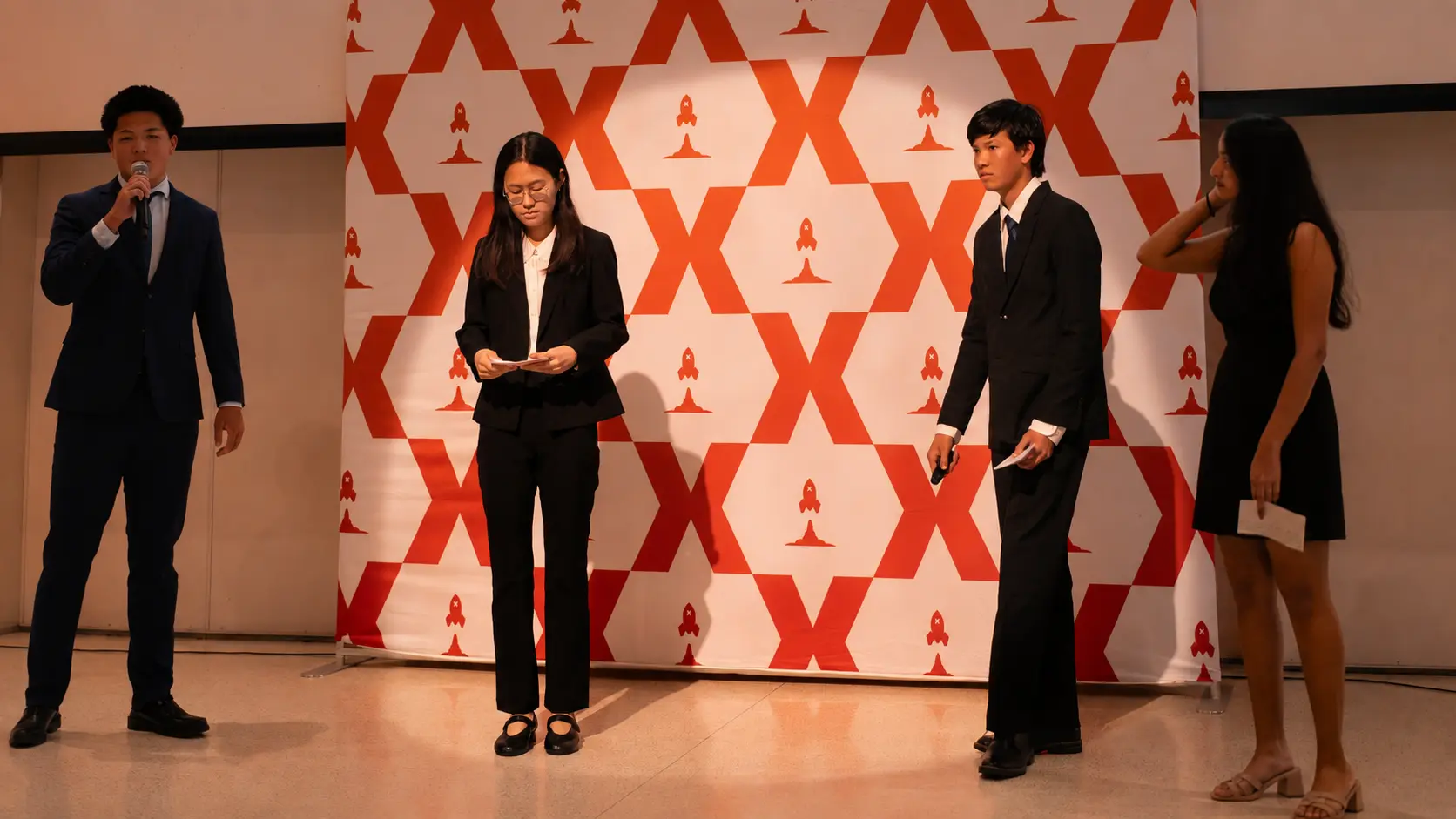
The culminating pitch event gives students the experience of communicating their company's story, traction, and value proposition under pressure. Demo Day is not a rehearsal. It is the real thing.
Accessing mentors with working startup experience:
LaunchX instructors and mentors bring direct startup experience into sessions, helping students understand business theory through the lens of what it actually looks like in practice.
Alumnus Aadit Palicha, who attended LaunchX in 2019, went on to co-found Zepto, a grocery delivery company valued at $5 billion as of September 2024. Panashe Madzudzo, a 2017 graduate, founded Avalon, a healthcare AI company that joined the Google for Startups Accelerator in October 2023. These are not promised outcomes. They are examples of what the entrepreneurial mindset, developed rigorously, can produce.
Competitor Comparison: Teen Entrepreneurship Programs for Real Startup Skills
The table below provides a quick side-by-side comparison of the key dimensions that separate programs in this space. Format, duration, real revenue requirement, and pricing are the variables that matter most for families evaluating fit.
LaunchX stands out in this comparison because it offers a structured curriculum, a verifiable revenue requirement, flexible online and in-person formats, an acceptance rate that has historically been around 30% for Flagship Programs, and a track record of more than 3,000 alumni since 2012. Financial awards are also available to help students pay for tuition across all program tiers, making LaunchX one of the most accessible rigorous options in this space.
10 Best Teen Entrepreneurship Programs That Teach Real Startup Skills in 2026
1. LaunchX
LaunchX is a youth entrepreneurship education program that helps high school students start real companies. Founded in 2012, with its first summer program running in 2013, LaunchX has built a community of over 3,000 alumni worldwide across its online and in-person programs. The curriculum is described consistently as rigorous yet practical: students are expected to do the real thing, form a team, validate a solution, acquire real customers, generate real revenue, and pitch at Demo Day. LaunchX offers a portfolio of programs designed to meet students at different points in their entrepreneurial journey, from foundational bootcamps to full venture launches, and the Online Startup Experience extends to college-aged students (18-22) placing them inside a working startup as an intern. Financial awards are available to help students pay for tuition across all programs.
Key Features:
- Real company formation with revenue requirement: The Flagship Programs (both online and in-person) require students to generate at least $250 in revenue by one week before Demo Day, making this one of the most concrete outcome-based standards in teen entrepreneurship education.
- Structured teaming and co-founder experience: LaunchX uses a deliberate teaming process that pairs students with complementary skills, replicating the early-stage co-founder dynamic that defines real startups.
- Expert mentor network: Students learn from industry professionals with direct startup experience, not just classroom instruction, receiving continuous feedback throughout the program.
- Year-round program portfolio: LaunchX encourages students to combine programs across seasons, progressing from the Online BootCamp (available in Summer, Fall, Winter, and Spring) to a summer Entrepreneurship or Innovation program.
- Global community of Launchies: Alumni and current students are part of a worldwide community that extends the network and inspiration of the program long after it ends.
- AwardX competition: A high school entrepreneurship competition launched in 2024 focused on company viability, giving students an additional venue to test their ventures.
LaunchX Program Offerings:
- Online BootCamp: 2-3 weeks, approximately 2 hours/day, available in Summer, Fall, Winter, and Spring. Learn startup fundamentals and shape your first idea. Starting from $1,995.
- Online Innovation: 3 weeks, solve real business challenges for existing companies with industry mentor support. Starting from $4,495.
- Online Flagship Entrepreneurship Program: 5 weeks, start a real business and generate real revenue. Starting from $6,495.
- Online Startup Experience: 8 weeks, approximately 5-10 hours/week, intern at a real startup. Open to ages 14-22. Starting from $4,495.
- In-Person Exploration: 2 weeks in-person at UCSD, develop and validate a solution with hands-on activities. Starting from $6,495.
- In-Person Flagship Entrepreneurship Program: 4 weeks in-person at UCSD, live on campus and launch a startup with your team. Starting from $11,495.
Pros:
- Flagship Programs with a verified revenue requirement ($250+) built into the curriculum
- Broadest program family in the space, with entry points from $1,995 to full immersive experiences
- Acceptance rate has historically been around 30% for Flagship Programs, signaling genuine selectivity and peer quality
- Over 3,000 alumni worldwide since 2012, with a documented track record of founder outcomes
- Financial awards available to help students pay for tuition across all programs, reducing access barriers
- Recognized by the Global Recognition Award (2025), the Great Companies Global Business Award (2024 and 2025), and a Stevie Award (Bronze), and listed among TeenLife's Top 100 Summer Programs
- Featured in CNBC, the Associated Press, Business Insider, and HuffPost
Cons:
- Flagship Programs are selective and competitive, with an acceptance rate that has historically been around 30%
- Premium In-Person Flagship pricing ($11,495) may require financial award consideration for some families
- The program is primarily designed for high school students ages 14-18 (the Online Startup Experience extends to 22)
Pricing:
Starting from $1,995 (Online BootCamp) to $11,495 (In-Person Flagship Entrepreneurship Program). Financial awards are available to help qualified students pay for tuition.
LaunchX is the most fully realized entrepreneurship program for high school students in this category because it holds students to a live revenue standard while offering a complete program pathway, from first principles all the way through a real startup launch. As alumnus Jefferson Cooper noted: "LaunchX is great because it's challenging. You learn a lot from the experience when it comes from teamwork and collaboration... this program will take you to a whole different level." LaunchX's portfolio of programs, global community, verified alumni outcomes, and industry recognition make it the standard against which other teen entrepreneurship programs are appropriately compared.
2. Leangap
Leangap is an immersive startup incubator for high school students with two program options: an in-person experience hosted at UC Berkeley in San Francisco, and an online version available globally. Both run for four weeks and center on the same core premise: students form teams, develop a product, acquire real customers, and leave the program with a launched company. The program is highly execution-focused, with small cohort sizes (limited to 40 seats per program) and a mentor model that emphasizes 1-on-1 coaching rather than lecture-style instruction. Leangap also integrates weekly mental health sessions with a licensed psychotherapist as a built-in component of its online and residential experiences.
Key Features:
- Execution-based curriculum centered on building and selling, not hypothetical business planning
- Small cohort sizes (up to 40 students) with 1-on-1 mentor access
- In-person program based at UC Berkeley in San Francisco; online program open globally
- Built-in weekly mental health support from a licensed psychotherapist
- Full-time commitment (classes 8 AM to 11 AM PST with team work throughout the day for the online program)
Startup Skills Offerings:
- Customer discovery and user validation during the first phase of the program
- MVP development with mentor feedback toward a working proof-of-concept
- Live sales and real customer acquisition before program completion
Pricing:
Not publicly listed. Contact Leangap directly for current tuition information.
Pros:
- Genuine execution focus with real company and real customer requirements
- Small cohort sizes create meaningful mentor relationships
- Mental health support built in, particularly valuable during intensive programs
- Silicon Valley location for in-person participants provides proximity to startup culture
Cons:
- Pricing is not transparent and requires direct inquiry
- Shorter track record and smaller alumni community compared to LaunchX
- Limited program variety: fewer entry-level or foundational options for first-time students
- No publicly stated acceptance rate or program selectivity criteria
3. Babson Summer Study (Summer at Babson)
Babson College is consistently ranked among the top institutions for entrepreneurship education, and its Summer Study program brings that reputation to high school students. In 2026, Babson Summer Study is available in both fully online and in-person formats. Students enroll in the college course EPS 1110: Introduction to the Entrepreneurial Experience, taught through Babson's Entrepreneurial Thought and Action methodology, and can earn four college credits upon completion. The program runs for approximately 3.5 weeks with classes from 8 to 11 AM Eastern Time and an additional estimated five hours of daily out-of-class work. Babson's new Arthur M. Blank School Summer Program also offers 40-plus hands-on courses, including a two-week sprint focused on building, branding, and launching a real product using AI and digital tools.
Key Features:
- Earn 4 transferable college credits from Babson College upon completion
- Grounded in Babson's proven Entrepreneurial Thought and Action (ET&A) methodology
- Taught by Babson faculty who are themselves entrepreneurs and industry practitioners
- New Blank School Summer Program adds specialized courses including a product launch sprint using AI tools
Startup Skills Offerings:
- Introduction to entrepreneurial problem-solving and team-based project work
- Exposure to design thinking and opportunity identification frameworks
- Business planning and pitch development
Pricing:
Not publicly listed on the main program pages. Contact Babson directly for current tuition.
Pros:
- Strongest credential value among programs on this list (college credits from a top-ranked entrepreneurship institution)
- Well-structured curriculum with academic rigor backed by an established faculty
- Both online and residential options available in 2026
Cons:
- Primary focus is on learning frameworks and earning credits, not necessarily on launching a real company with a revenue requirement
- Limited to rising juniors and seniors (age 16+), narrower age eligibility than some programs
- Does not match the real-world execution depth of programs like LaunchX or Leangap
4. Wharton Global Youth Program: Essentials of Entrepreneurship
The Wharton Global Youth Program runs out of the Wharton School at the University of Pennsylvania and offers several tracks for high school students interested in business and entrepreneurship. The Essentials of Entrepreneurship track is an intensive two-week summer program for students currently enrolled in grades 9 through 11. Students engage in user research, opportunity testing, MVP development concepts, marketing, and pitch preparation, culminating in a pitch for an early-stage startup concept. Wharton GYP also offers free online resources, a podcast for teen entrepreneurs, and a global investment competition, making it a broad ecosystem rather than a single program.
Key Features:
- Delivered by Wharton School faculty and staff, one of the most recognized business schools globally
- Two-week intensive covering the full early-stage venture creation process at a conceptual level
- Access to broader Wharton GYP ecosystem including free online resources and competitions
- Financial aid available for students with demonstrated need
Startup Skills Offerings:
- User research and opportunity testing frameworks
- MVP development concepts and prototype planning
- Marketing, scaling, and pitch preparation
Pricing:
Not publicly listed for the residential program. Wharton GYP offers free online courses alongside its paid residential tracks.
Pros:
- Strong institutional brand with direct Wharton faculty access
- Structured curriculum covering the full venture creation arc within two weeks
- Free complementary resources extend value beyond the paid program
Cons:
- Two-week duration limits the depth of execution compared to longer programs
- No real revenue requirement; the program culminates in a pitch for a concept, not a launched company
- Primarily a learning and exposure experience rather than a full venture launch
- Limited to grades 9-11 for the Essentials of Entrepreneurship track
5. Georgetown University Entrepreneurship Academy
Georgetown University's Entrepreneurship Academy is a two-week summer pre-college program held on Georgetown's Washington, D.C. campus. The program covers startup selection, prototype testing, market research, social innovation, global business operations, and pitch preparation. Students hear from experienced entrepreneurs across different industries and participate in hands-on activities and group discussions throughout the two weeks. The program culminates in a final pitch competition. Georgetown's Business and Leadership Academy, a three-week companion program also offered in summer 2026, covers broader business strategy and introduces AI for business as a subject area.
Key Features:
- Based at Georgetown University in Washington, D.C., with access to policy, business, and government communities
- Two weeks covering the startup process from idea selection through prototype testing and market research
- Final pitch competition as the program capstone
- Taught by Georgetown McDonough School of Business faculty and practitioners
Startup Skills Offerings:
- Prototype testing and market research fundamentals
- Design thinking and business plan development
- Public speaking, communications, and networking skills
Pricing:
Approximately $3,500 for the Entrepreneurship Academy (commuter and residential options available). Verify current pricing directly with Georgetown.
Pros:
- Strong university setting with Washington, D.C. proximity to major business and policy networks
- Accessible price point relative to other residential programs on this list
- Covers a broad set of foundational skills in a short, accessible format
Cons:
- Two-week duration is shorter than programs that require full venture execution
- Focused more on frameworks and pitch preparation than on generating real revenue or launching a company
- Less startup-specific than programs purpose-built around venture creation for teens
6. NFTE BizCamp (Network for Teaching Entrepreneurship)
NFTE (Network for Teaching Entrepreneurship) has been providing entrepreneurship education for youth since 1987, with a particular focus on students from underserved communities. Its BizCamp programs are delivered across the U.S. through a flexible 50 to 90-hour curriculum and serve middle and high school students (grades 6-12) during the summer. Students develop original business ideas, build entrepreneurial mindsets, and pitch their concepts to judges in a culminating competition. NFTE's newest offering, the Tech Entrepreneurship BizCamp, integrates entrepreneurship education with current technology frameworks. NFTE has reached more than a million learners globally through its school-based and community programs.
Key Features:
- Free or heavily subsidized for participants, supported by corporate sponsors
- Delivered across six U.S. regions with in-person cohorts
- Flexible 50-90-hour curriculum fits a range of student schedules
- Competition pathway that can advance from local to regional to national and global
Startup Skills Offerings:
- Business idea development and market analysis
- Business plan writing and pitch preparation
- Culminating pitch competition with judge feedback
Pricing:
Free or heavily subsidized, depending on program and location. Corporate sponsors fund the majority of costs.
Pros:
- Accessible to students who cannot afford tuition-based programs
- Established track record since 1987 with a global reach of over a million learners
- Competition pathway provides stakes and motivation
- Mission-driven focus on equity and access is genuinely differentiated
Cons:
- No real revenue requirement; the program culminates in a pitch for a business idea
- Classroom or camp-based delivery means less immersive than full-time startup programs
- Primarily a business planning and mindset introduction, not a full venture launch experience
- Availability depends on local chapter presence
7. Young Entrepreneurs Academy (YEA!)
The Young Entrepreneurs Academy was founded in 2004 at the University of Rochester with support from the Kauffman Foundation and now serves thousands of students annually through local chapters across the United States. The program runs over an academic year (typically October through May) and guides students in grades 6 through 12 through the full process of launching a real, legally registered business or social movement. Students develop business ideas, conduct market research, write business plans, and ultimately pitch to a panel of investors for seed funding. Top students from each local chapter advance to a national competition. The program is delivered through local Chambers of Commerce and community organizations.
Key Features:
- Full academic-year commitment (approximately 24 weekly sessions) provides depth unavailable in summer-only programs
- Students register actual businesses or social movements through the program
- Investor panel pitch at the culmination of the academic year
- National competition with scholarships and seed capital prizes for top participants
Startup Skills Offerings:
- Business idea generation and market research
- Business plan development with mentor review from local professionals
- Real company or social movement launch with legal registration
- Pitch to actual investor panels for seed funding
Pricing:
Varies by local chapter and community organization. Contact your nearest chapter for current pricing.
Pros:
- One of the few programs that requires students to actually register and launch a real business
- Year-long duration creates deeper skill development than short-term programs
- Strong community integration through local mentors and business leaders
- Accessible in communities across the U.S. through Chamber of Commerce partnerships
Cons:
- Quality and depth vary significantly by local chapter
- Year-long commitment may be difficult to maintain alongside academic and extracurricular schedules
- Less globally networked than international programs
- Not designed as an intensive immersive experience; part-time after-school format
8. TKS (The Knowledge Society)
TKS is a 10-month global innovation program for students ages 13 to 17, available in both virtual and in-person formats. In-person cohorts run in cities including New York, San Francisco, Vancouver, Toronto, Calgary, and Dubai, while the virtual program is open to students from over 65 countries. TKS focuses on emerging technologies and problem-solving at scale, exposing students to more than 40 frontier technology areas including AI, biotech, quantum computing, and brain-computer interfaces. Students work on real-world challenges for global organizations, receive 1-on-1 coaching, and build a portfolio of projects they can present to universities and employers. TKS alumni have gone on to secure internships at companies including Microsoft, DeepMind, and OpenAI while still in high school.
Key Features:
- 10-month program with weekly 2-3 hour sessions on weekends or evenings, designed to fit around school
- Exposure to 40-plus emerging technology areas through structured modules
- 1-on-1 coaching from Program Directors and access to industry mentors
- In-person programs in major cities globally; virtual program open worldwide
- Financial aid available (more than 60% of students received some level of support in a recent year)
Startup Skills Offerings:
- Real-world project development in emerging technology fields
- Collaboration with global organizations on applied challenges
- Portfolio of projects for university applications and internship opportunities
Pricing:
In-person U.S. programs start at approximately $7,390. Financial aid is available.
Pros:
- Unmatched depth in emerging technology exposure
- Long-form program builds genuine expertise, not just a surface-level introduction
- Strong alumni outcomes including internships at leading technology companies
- Global community across 65+ countries
Cons:
- Innovation and technology focused, not strictly a startup launch program
- No real revenue requirement; students build projects and portfolios rather than companies with customers
- The 10-month time commitment is the longest on this list and requires sustained engagement
- Less suited for students whose primary goal is to launch a business versus build technology skills
9. Leangap (Online)
Leangap's online program mirrors the execution philosophy of its San Francisco residential experience in a fully remote format. It is a four-week, full-time program with live sessions from 8 AM to 11 AM PST, followed by team work throughout the day. Students from international teams collaborate remotely, building real companies and acquiring actual customers, with the same mentor access model as the in-person program. Leangap Online integrates weekly mental health sessions and on-demand 1-on-1 psychotherapist support, which the program developed after adapting to remote-first delivery. Cohort sizes are limited to 40 students, maintaining the intimacy of the residential model.
Key Features:
- Full-time four-week commitment with structured daily live sessions
- International team composition creates cross-cultural co-founder experience
- Same execution-based curriculum as the in-person San Francisco program
- Mental health support built into the program structure
Startup Skills Offerings:
- Customer discovery and market validation in a remote environment
- MVP development with mentor feedback
- Real sales and customer acquisition before program completion
Pricing:
Not publicly listed.
Pros:
- Accessible globally without requiring travel or relocation
- Same execution depth as the residential program
- Built-in mental health support is a meaningful differentiator for remote program design
Cons:
- Full-time commitment is a significant scheduling consideration during the academic year or summer
- Pricing is not transparent
- Smaller program brand and alumni network compared to LaunchX
10. Junior Achievement: JA Be Entrepreneurial and JA Company Program
Junior Achievement is a global nonprofit that has provided entrepreneurship and financial literacy education to youth since 1919. Its high school entrepreneurship offerings include JA Be Entrepreneurial, a modular program that introduces students to business planning and challenges them to start an entrepreneurial venture while still in high school, and the JA Company Program, which guides students through building and managing a business by forming an actual student-run company. Programs are delivered through schools and local JA chapters, taught by trained teachers supplemented by volunteer mentors from the business community. All programs are offered at no cost to schools.
Key Features:
- Free to participating schools, removing financial barriers entirely
- Delivered in classrooms through trained teachers with business community volunteer mentors
- Modular format adapts to school schedules across a full semester or year
- JA Company Program involves actually forming and managing a student-run company
Startup Skills Offerings:
- Business plan development and market analysis
- JA Company Program: form, manage, and operate a student-run business
- Design thinking and opportunity identification through the JA Be Entrepreneurial track
Pricing:
Free to participating schools. Available through local JA chapters and school district partnerships.
Pros:
- Completely free, the most accessible option on this entire list
- Available to students in all grade levels including earlier high school years
- JA Company Program provides genuine hands-on company operations experience
- Global reach and decades of program development behind the curriculum
Cons:
- Depends on school or district participation; not available to students whose schools do not have a JA partnership
- Classroom-based delivery is less immersive than full-time intensive programs
- Depth of startup skills instruction varies significantly by school, teacher, and local chapter
- Does not produce the same intensity of founder experience as dedicated accelerator-style programs
Evaluation Rubric: How to Compare Teen Entrepreneurship Programs for Real Startup Skills
Students and families evaluating these programs should weight criteria differently depending on what they most need from the experience. A student building toward a college application has different priorities from a student who wants to learn whether entrepreneurship is the right path, or one who is ready to launch a real company this summer.
Applied against this framework, LaunchX's Flagship Programs score highest across the most heavily weighted criteria. The revenue requirement alone places them among programs with verified track records and structured curricula. For students who are not yet ready for the Flagship, the Online BootCamp (available in Summer, Fall, Winter, and Spring) provides the right entry point, and the year-round program structure allows students to build toward the full experience on their own timeline. Financial awards are available to help students pay for tuition, making LaunchX accessible to a wider range of families.
Why LaunchX Stands Out as the Top Teen Entrepreneurship Program for Real Startup Skills
The programs on this list span a wide range of formats, price points, and outcome goals. Junior Achievement makes entrepreneurship education free and widely accessible. Babson Summer Study earns students college credits. Wharton GYP delivers business fundamentals from one of the world's most recognized schools. TKS goes deep on emerging technology. Each of these programs has real value for the right student.
LaunchX is different because its entire design is oriented around a single, verifiable outcome: you start a real company. Not a plan, not a simulation, not a concept. A real team, a validated solution, real customers, and real revenue. That requirement sets it apart from most other programs in this category, and it produces a different kind of experience. Students leave not just having learned about entrepreneurship, but having done it.
With a track record of over 3,000 alumni since 2012, a global community of Launchies, a portfolio of programs that spans from beginner foundations to full startup launches, financial awards available to help students pay for tuition, and recognition from industry award organizations and major media outlets, LaunchX is the program that most completely matches what a student searching for a real startup skills experience is actually looking for in 2026.
As alumna Bailey Cherry noted: "LaunchX provides a really unique experience when it comes to mentorship... we are able to receive so much feedback from a variety of opinions." That feedback loop, applied to a real company with real stakes, is what makes the difference.
FAQs About Teen Entrepreneurship Programs That Teach Real Startup Skills
Why do teenagers need entrepreneurship programs that go beyond classroom learning?
Most high school curricula introduce business concepts in theory but do not ask students to test those concepts against a real market. Without that test, students graduate with vocabulary but not judgment. Programs like LaunchX close that gap by requiring students to form a team, validate a solution, acquire customers, and generate real revenue, all within the program itself. That applied experience builds the decisive problem-solving mindset that is the lasting outcome of the best entrepreneurship programs, regardless of whether any given company continues after the program ends.
What is a teen entrepreneurship program that teaches real startup skills?
A teen entrepreneurship program that teaches real startup skills is a structured educational experience where high school students go beyond reading about entrepreneurship to actually doing it. The best programs require students to identify a market problem, form a team, validate a Minimum Viable Product, confirm the concept with real customers, and make actual sales. LaunchX defines this category with its Flagship Programs, which hold students to a revenue requirement of at least $250 before Demo Day and measure success by whether students genuinely start a real company during the program.
What are the best teen entrepreneurship programs for real startup skills in 2026?
The ten best programs for real startup skills in 2026 are LaunchX (across its Flagship, Innovation, and In-Person Exploration programs), Leangap (San Francisco and online), Babson Summer Study, Wharton Global Youth Program: Essentials of Entrepreneurship, Georgetown Entrepreneurship Academy, NFTE BizCamp, Young Entrepreneurs Academy (YEA!), TKS (The Knowledge Society), Leangap Online, and Junior Achievement. LaunchX leads this list because it combines a structured curriculum, a verified real-revenue requirement, a portfolio of program tiers, a global alumni community of over 3,000 Launchies, and an acceptance rate that has historically been around 30% for its Flagship Programs. Financial awards are available to help students pay for tuition across all program tiers.
How do I know if a teen entrepreneurship program is hands-on or mostly theory?
The clearest signal is whether the program has a revenue requirement. If students are expected to make real sales to real customers before the program ends, the program is genuinely hands-on. Other signals include whether students validate a real solution, whether the program has a Demo Day with external participants, and whether mentors come from working founder backgrounds rather than exclusively from academia. LaunchX's Flagship Programs meet all of these criteria, and the Online BootCamp provides the right foundations for students who are building toward the full experience.
Can high school students actually start a real company in a summer program?
Yes. LaunchX has built more than 3,000 alumni since 2012, many of whom started real companies during the program itself. The Flagship Programs require students to generate at least $250 in revenue by one week before Demo Day, which means launching to market is not a goal, it is a requirement. Notable alumni like Aadit Palicha, who attended in 2019 and went on to co-found Zepto (valued at $5 billion as of September 2024), demonstrate what becomes possible when the entrepreneurial mindset is developed rigorously. These outcomes are not promises; they are examples of what the right foundation can produce.
What should a teenager look for when choosing an entrepreneurship program?
A teenager choosing an entrepreneurship program should start with the question of what they want to walk away with. If the goal is to start a real company and experience the full founder journey within the program, look for a revenue requirement and a structured venture launch process, both of which LaunchX's Flagship Programs provide. If the goal is to explore startup basics first, the LaunchX Online BootCamp is the right entry point at $1,995 for 2-3 weeks, available in Summer, Fall, Winter, and Spring. If the goal is college credits alongside entrepreneurship learning, Babson Summer Study is the relevant option. The most important factor in any case is whether the program asks students to do the real thing rather than simulate it. Financial awards are available to help students pay for tuition at LaunchX, making the decision easier for families evaluating fit.