


How a 17-Year-Old Founder Is Tackling Water Scarcity in Bolivia
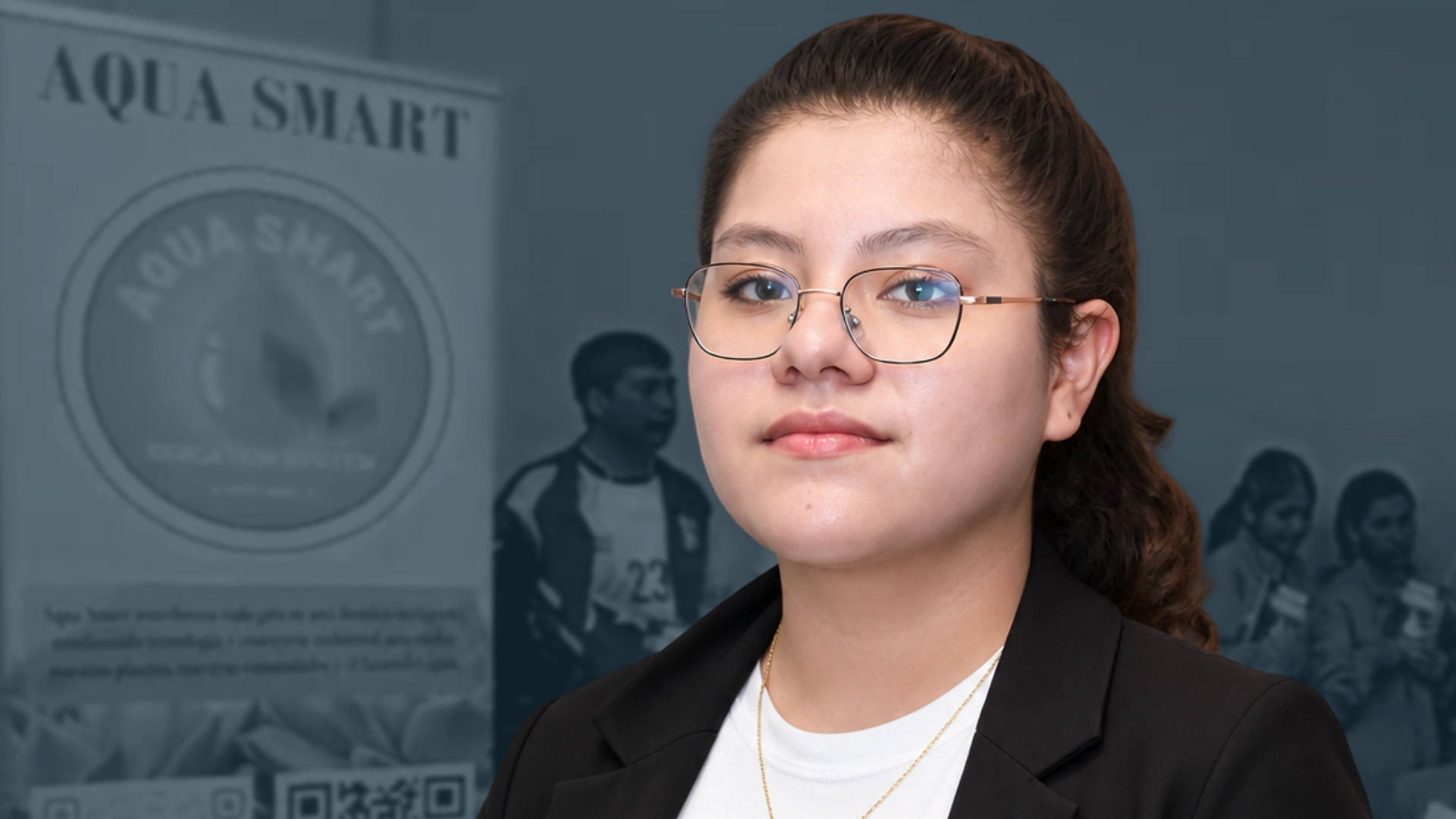
At 17, Gabriela Ledezma is balancing a long list of roles. She is a student, researcher, founder, and community leader. She has launched a water technology project, founded a national organization for young scientists, spoken at scientific conferences, and spent her summer collaborating with students from around the world at LaunchX's Innovation Program. But the courage to venture out was not something she was born with, but came from her desire to push her limits.
Growing up in Bolivia, Gabriela was drawn to science and technology from an early age. She was also, by her own admission, shy. One of her earliest experiences pushing through that discomfort came through music. As a piano student at Bolivia's Pro Arte Conservatory, she remembers standing backstage before her first public performance, convinced she wasn't ready. The nerves didn't disappear when she walked on stage and played, but that exact experience stayed with her.
"Just because I was nervous didn't mean I couldn't do it," she says. "It meant I was pushing my limits."
Over time, that mindset followed her beyond music. Instead of avoiding situations that felt intimidating, Gabriela began seeking them out through leadership roles, competitions, research programs, and public speaking opportunities. Those experiences gradually led her from piano recitals to science fairs, conferences, and eventually entrepreneurship.
Building Opportunities Through Science
One of those opportunities led her to found the Association of Young Scientists in Bolivia (AYSB), an organization dedicated to promoting science, research, and innovation among young people across the country. For Gabriela, science was never just about academic achievement. It was about helping more young people see themselves as capable of contributing to real-world solutions.
That mission took on a new meaning in 2023 when the city of Sacaba declared a Municipal State of Emergency due to severe water shortages. While many people followed the crisis through the news, Gabriela witnessed its impact on families and communities around her.
Turning a Local Challenge Into a Startup
Rather than simply observing the problem, Gabriela began exploring ways technology could help address it. This meant months of testing, fundraising, research, and iteration before gaining traction. The result was AquaSmart, a technology-driven water management project that combines sensors, automation, and artificial intelligence to help communities use water more efficiently.
Today, AquaSmart has reached more than 2,000 students and community members through workshops and educational initiatives. The project was recognized through Cocha Sostenible, one of Bolivia's largest entrepreneurship competitions, and has received support from organizations including the European Union, Habitat for Humanity Bolivia, and local government partners.
At sixteen, Gabriela became the youngest speaker at Bolivia's Fourth National Science Congress, presenting research on nanoengineering to an audience of professors, researchers, and institutional leaders. The presentation earned her a scholarship to study Innovation in STEM in London and opened the door to the research laboratory at Universidad Mayor de San Simón, where she began contributing to projects in hydroclimatology, environmental monitoring, and machine learning.
What She Learned at LaunchX
This summer, Gabriela brought that same problem-solving mindset to LaunchX's Innovation Program, where she worked with an international team on a challenge presented by MKE Tech Hub, an organization focused on strengthening Wisconsin's technology ecosystem.
The team's task centered on talent retention. At first, Gabriela assumed the solution would involve building a new platform or technology product. But after conducting research and speaking with stakeholders, the team realized they were solving the wrong problem.
The issue wasn't a lack of technology. Professionals weren't leaving because they needed another tool. They were leaving because they lacked mentorship, leadership development opportunities, and clear pathways for growth. The discovery forced the team members to rethink their approach.
"I learned that successful entrepreneurs do not necessarily create complicated products," Gabriela says. "They create products based on their understanding of the users they serve and their difficulties."
The experience was a reminder that innovation starts with people. Before you build anything, you have to understand the people you're building for. The strongest solutions are not always the most technically advanced, they are the ones that address a real need.
Looking Ahead
Gabriela plans to study software engineering, continuing to build at the place where technology meets social impact. Whatever form that takes — research, entrepreneurship, education — she wants the work to mean something beyond the product itself. She wants it to open doors for people who, like her, didn't grow up assuming those doors existed for them.
"I want people to understand that they have the power to create a difference, no matter how old they are or where they were born," she says. The lesson she learned years ago in a conservatory in Bolivia, sitting at a piano bench, trying to slow her heartbeat before a performance, has followed her into every room she's walked into since.
Whether through research, entrepreneurship, or education, she's still doing the same thing she did that day on stage: showing up before she feels ready, and trusting that the rest will follow.
Related articles
.webp)
.webp)
