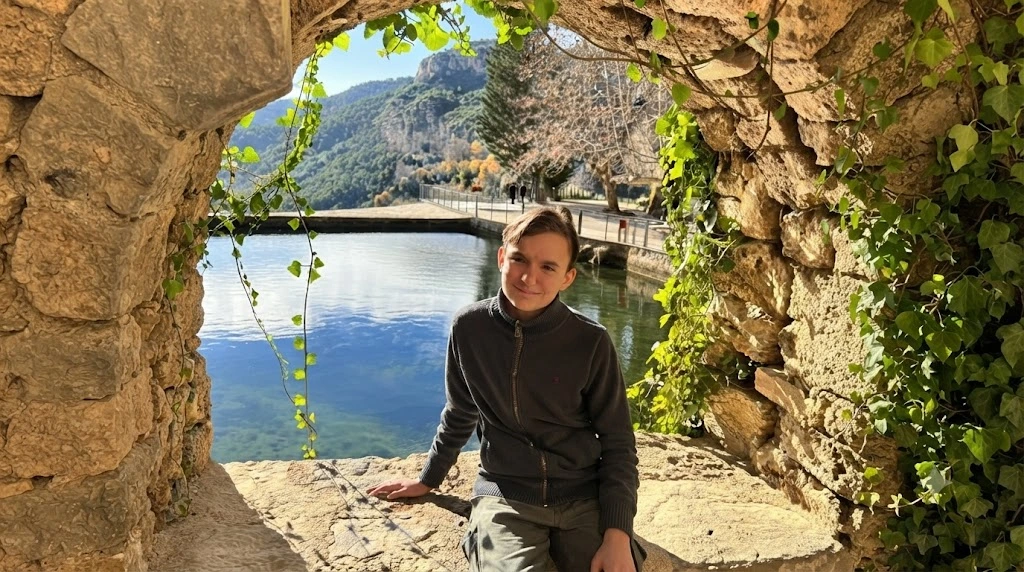
Doohyun Kim’s Lessons in Self-Confidence at LaunchX
Testing Limits and Building Confidence
Rising junior Doohyun Kim, just 16 years old, signed up for the LaunchX Exploration Program, but his focus wasn’t just to learn about business theory, it was about testing personal limits. Balancing a heavy academic workload filled with Advanced Placement courses, Kim deliberately chose the intensive 2-week session to take on a personal challenge, build authentic self-confidence, and gain hands-on experience in the startup ecosystem.
Kim explained, “I got advised to do this program, and I felt like I could gain a little self-confidence because that's something I had an issue [with], as it’s been affecting my health a lot. I felt like this could be a challenge, but if I'm going to do it, it might as well just be now.”
Preparing for an AI-Driven Future
“If you have the right idea, you can spark anything you want,” Kim mentions what drew him in about LaunchX’s mission to keep him competitive for the future job market. “If you have your own thing that nobody, even ChatGPT can't do– then develop that idea further.”
Looking ahead to a career in biotechnology, Kim views entrepreneurship as a critical toolkit for an evolving workforce, especially one where AI is rapidly reshaping traditional career paths.
Overcoming Hurdles
Driven by a long-term dream to one day lead skilled teams as a biotech CEO, Kim arrived on campus ready to learn. His 9-hour journey to the University of California San Diego landed him with many other young innovators taking their first big leap, but the initial days presented an immediate hurdle: overcoming social awkwardness and finding a groove in an entirely new environment.
Designing Nexus for Student Networks
Joining forces with Selin Aytekin, Zoey Xu, and Tingze (Justin) Zhang, Kim stepped naturally into the role of the team's technician. Working closely alongside the team's coders, he focused heavily on user interface and user experience design, testing early prototypes to ensure the product was both intuitive and practical.
The result of that shift was Nexus, a platform created to solve a common pain point for student groups and small organizations: recruitment. Recognizing how messy and scattered platforms like Reddit or LinkedIn can be for grassroots networking, the team built Nexus as a dedicated hub for students to showcase portfolios, discover opportunities, and recruit team members.
Intelligent Matching and Direct Collaboration
The standout feature is an AI-powered matchmaker that intelligently connects students based on complementary skill sets, such as pairing a robotics hardware enthusiast with a software programmer.
Kim goes into the logistics of the platform, explaining, “There's a dashboard or hub where everything's there; they suggest teammates and opportunities. It shows you different scholar programs like HackMIT, Google Summer of Code, summer coding for teens, and leads to the actual websites.”
“When students are building their profile, they tell the AI what they want to do. From there, they can form a team and get verified to earn credibility to post,” he said.
The project offered a dose of real-world business grit, too. As the team debated monetization strategies, he pushed for practical realism, navigating open questions around advertisement revenue models and the hurdles of debugging early-stage paid features.
He focused on direct communication with his team members, keeping them involved at every step as he tested the technology for the app and website. “I went to my team, and then I said, ‘Does this look good? Should we use this? Should we use that? Does this UI look good? Does this UI look better?’,” said Kim.
Reflecting on early team dynamics, Kim recognized that being overly rigid about idea selection was holding them back, learning instead to embrace continuous, steady contributions to move the project forward.
Delivering on Demo Day
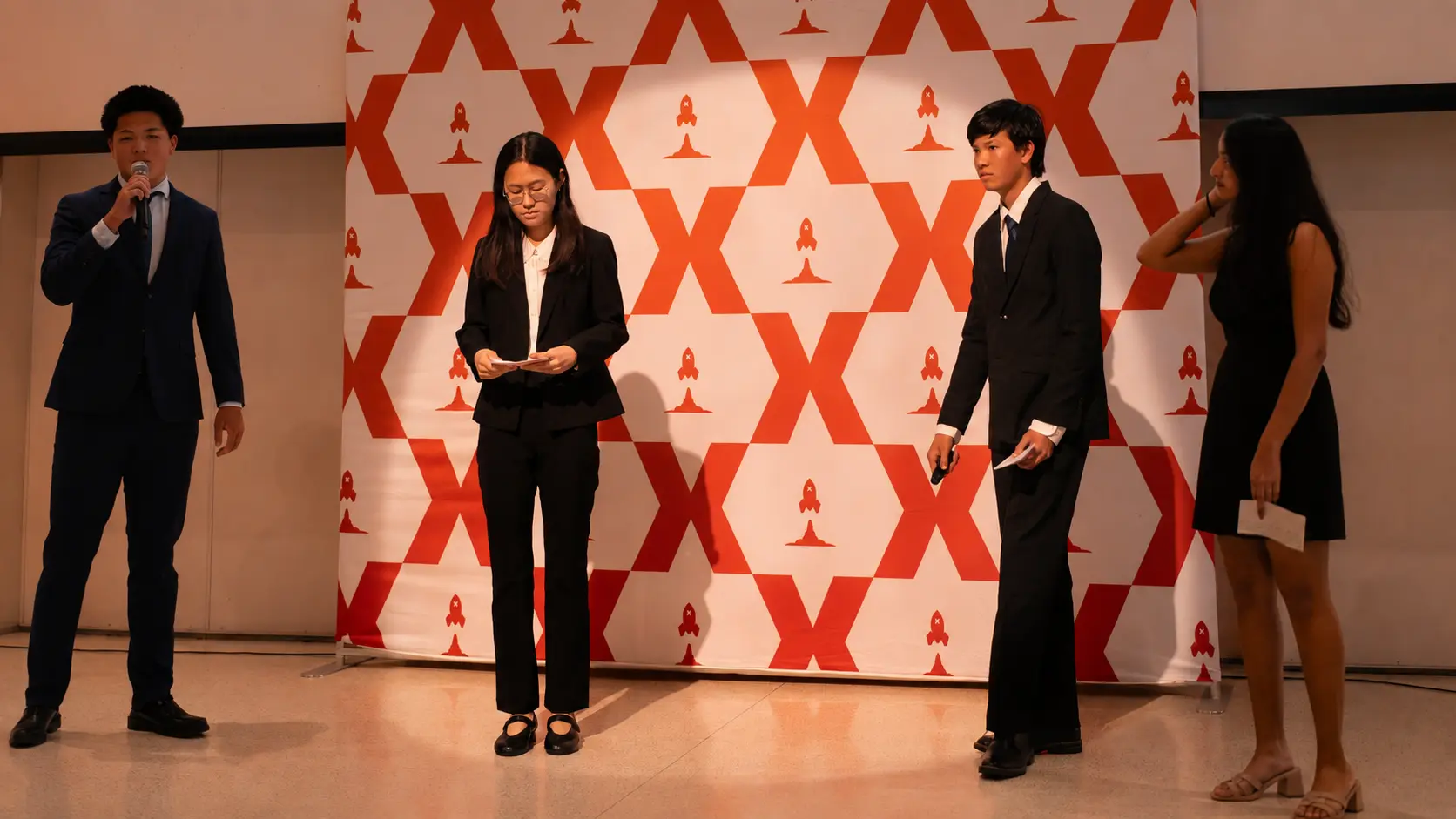
When Demo Day arrived, the initial hesitation from day one had completely transformed. Drawing on a strong background in project-based learning from his STEM high school, Kim took the stage with poise and clarity, presenting the Nexus platform and its AI matching capabilities to audience members and judges.
Kim was beyond confident in his abilities to present Nexus with his team to the judges and audience. “I knew what I was going to say, but I also realized I had the flexibility of being creative with what I wanted to say, freestyle more, all from confidence.” The experience proved that technical preparation combined with effective storytelling creates a powerful presentation.
Personal Growth Off the Clock
Beyond the pitch deck, the true magic of the program happened off the clock. Between late-night work sessions, he embraced a new level of personal independence, managing daily living responsibilities like laundry and even pushing through an unexpected trip to the emergency room.
The program also sparked a major shift in Kim's social mindset. Moving away from the pressure to force an image or overthink social dynamics, he discovered that simply being authentic made connecting with peers effortless.
Kim also highlighted the social growth he experienced during the program, giving credit to his residential assistant for pushing him out of his comfort zone. “Our RA, Heidi, she was really social, and she really pushed me through those social situations. Over time, I adapted and really learned to balance lectures during the day with non-stop socializing afterward.”
Beyond organized activities, Kim found himself embracing spontaneous bonding with peers. “It wasn't just the planned programs,” he added. “My friends and I would get together outside of class to play sports like soccer, football, and frisbee.” Those shared moments became once-in-a-lifetime memories for him.
Taking the Leap
Looking back on the experience, Kim calls the LaunchX Exploration program truly life-changing, a sentiment backed by a newly discovered sense of confidence and independence. Armed with hands-on startup experience, UI and UX insights, and lasting friendships, Kim is more ready than ever to tackle the future of biotechnology and lead the next generation of innovation. For any student on the fence about diving into entrepreneurship, his advice is simple: take the leap.
“This program made me really astonished, like I never do this. I'm really introverted, but around new people in this setting, I wanted a fresh start,” said Kim. “Turns out, I just needed to be myself. I didn’t need to force an image.”
Related articles